You want art? They've got art
The second in a series on the treasures in George Russell's museums.
The two blocks of University Ave. from 14th St. to Bearkat Blvd. are a historical and artistic treasure, courtesy of a set of museums established there by local real estate owners George and Suzanne Russell. Our previous article focused on the historical buildings housing these museums. Now let's look inside.
A riot of expression
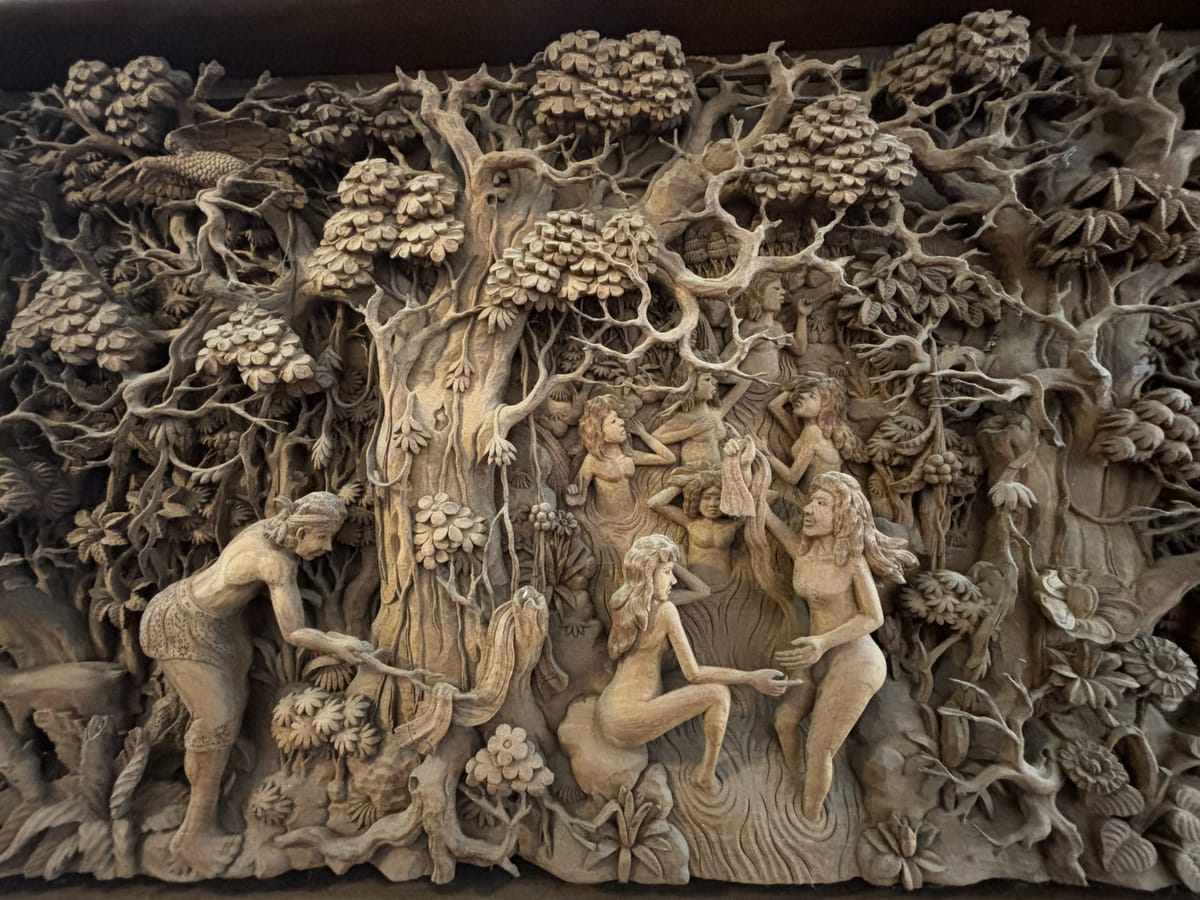
Every one of these museums is a riot of expression. While many museums space out their art, this is not George Russell's way. The walls are filled with art, the rooms are packed with art, sometimes there is art on the ceiling or floor. There is art everywhere.
You want paintings? The Museum of Texas Art (1425 University Ave.), The Museum of Folk and Outsider Art (1428 University), and the Museum of African and African-American Art, History, and Culture (1404 University) have works by Dennis Hickman, Bill Haveron, and Leon and Molly Bee Collins, all local to our area, among many others.
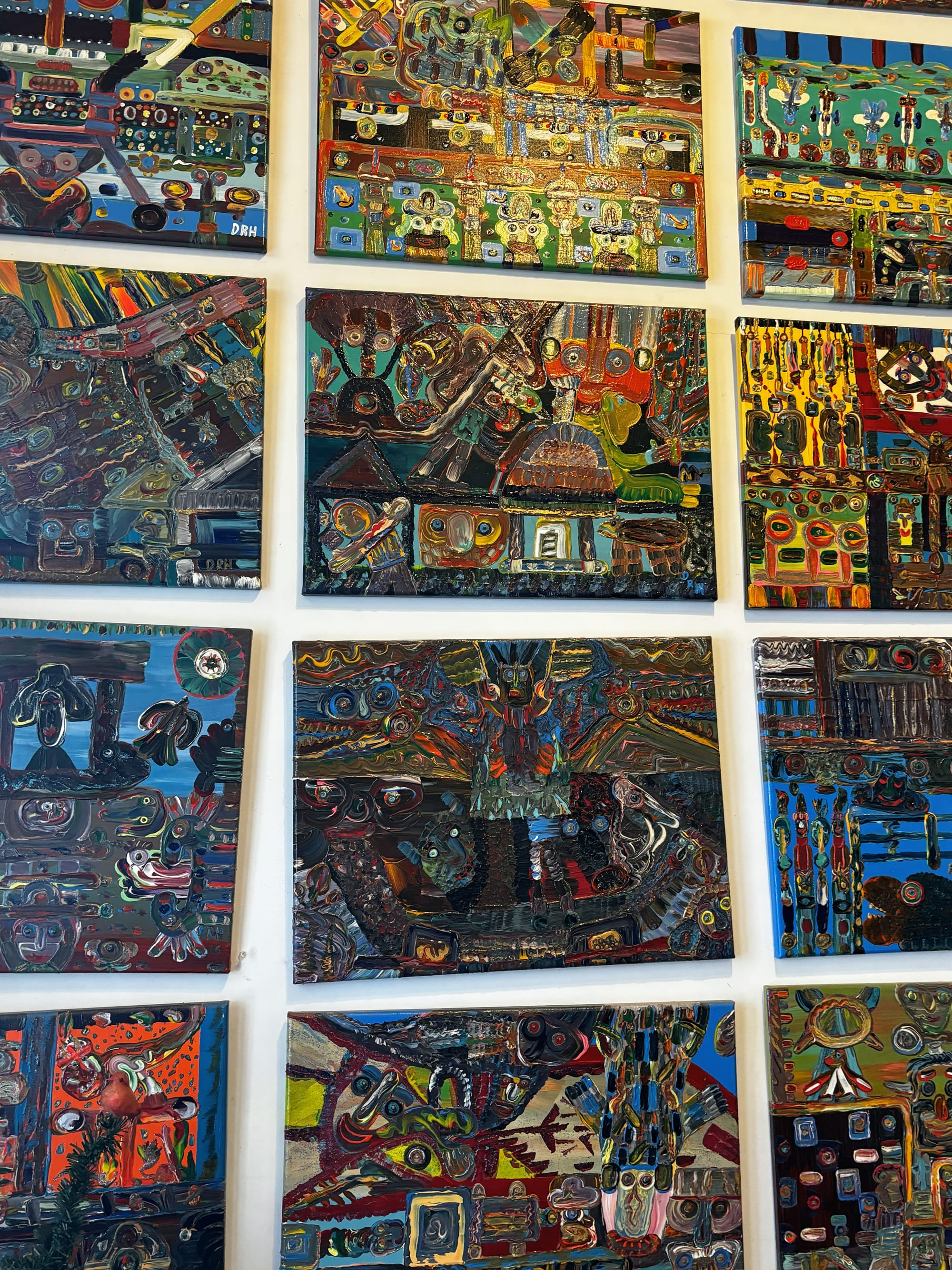
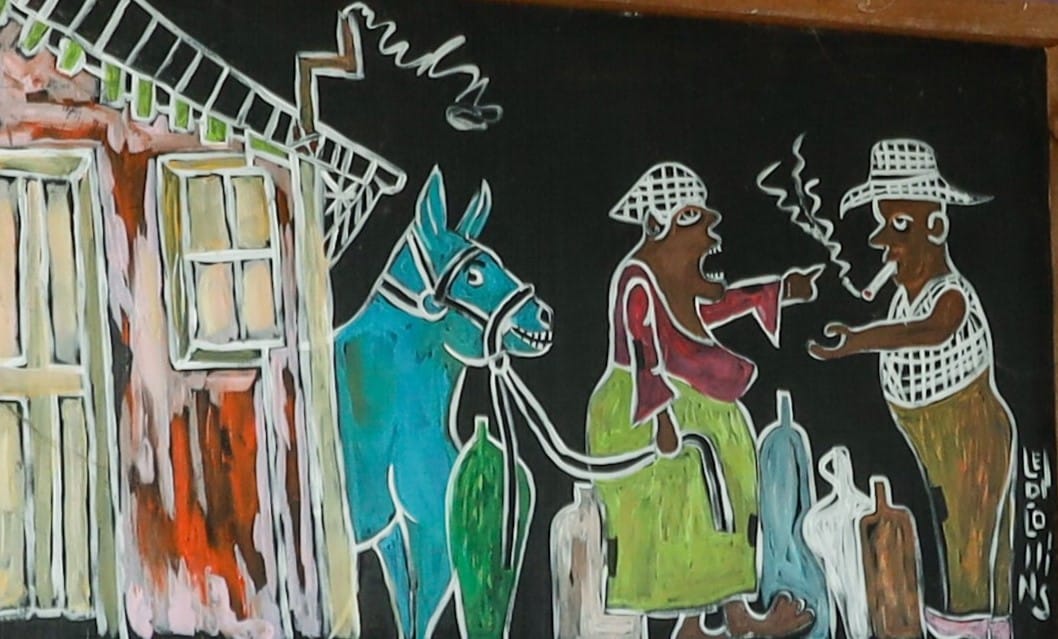
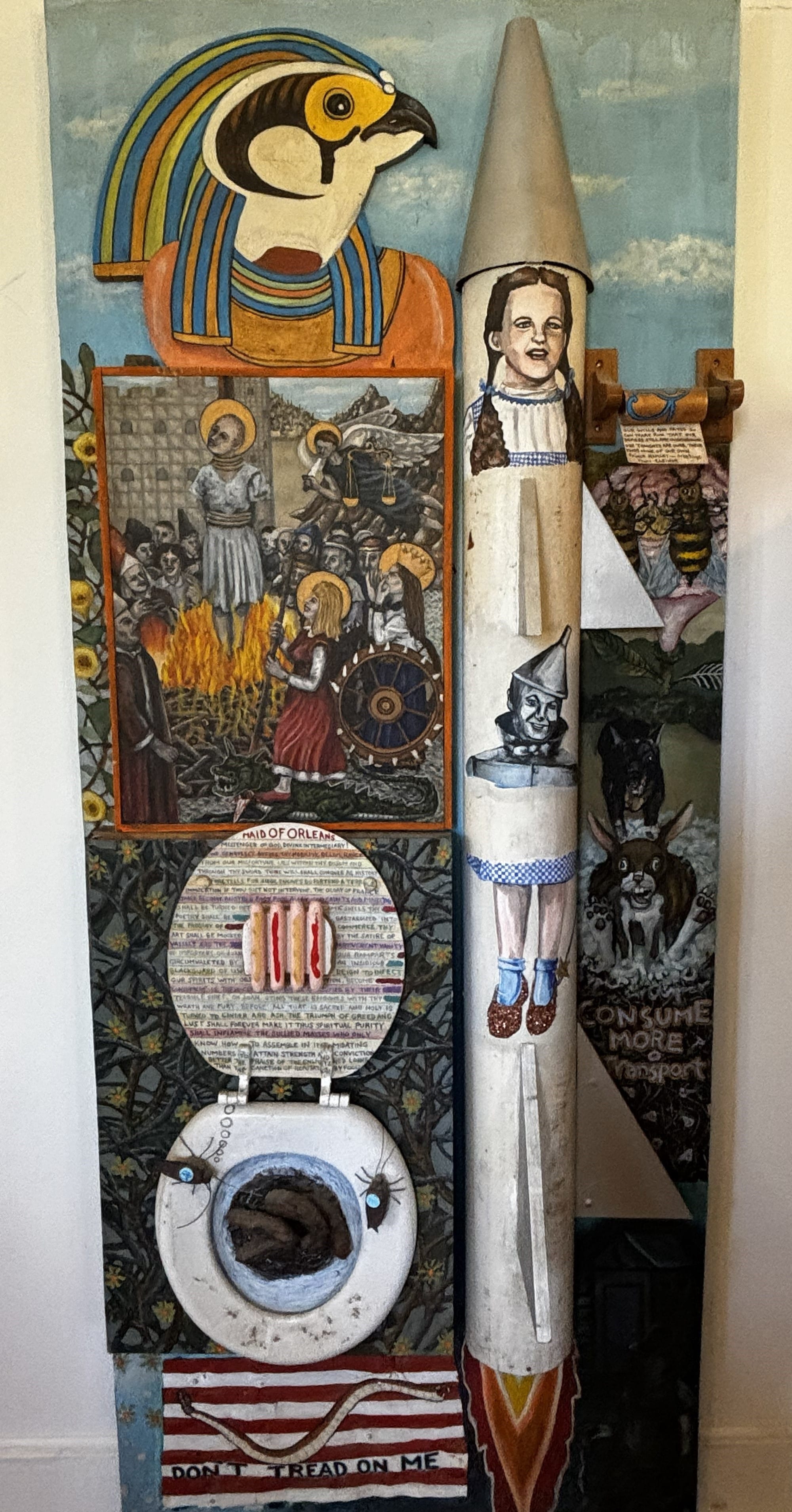
Clockwise from top left: A wall of paintings by Dennis Hickman, and paintings by Leon Collins and Bill Haveron. Photo credits: Mary-Brett Stringer (left, right), John Stipe (center).
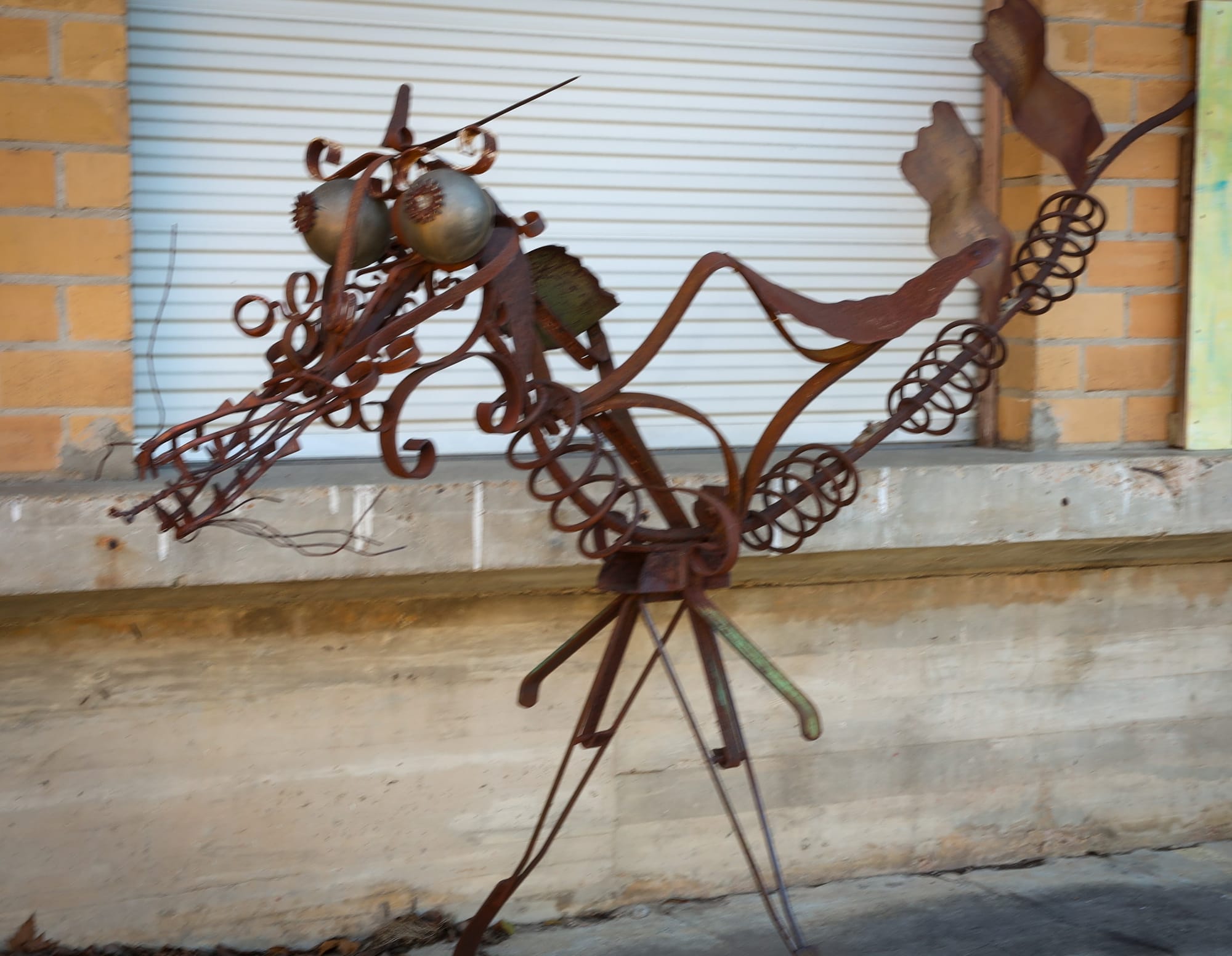
You want crafts? These museums have all kinds of crafts. Scrap-metal sculptures by Texan David Strickland. A cross made from bullets. Huntsville's first blood-letting tub, from back when that was a thing. Wood carvings. And so much more.
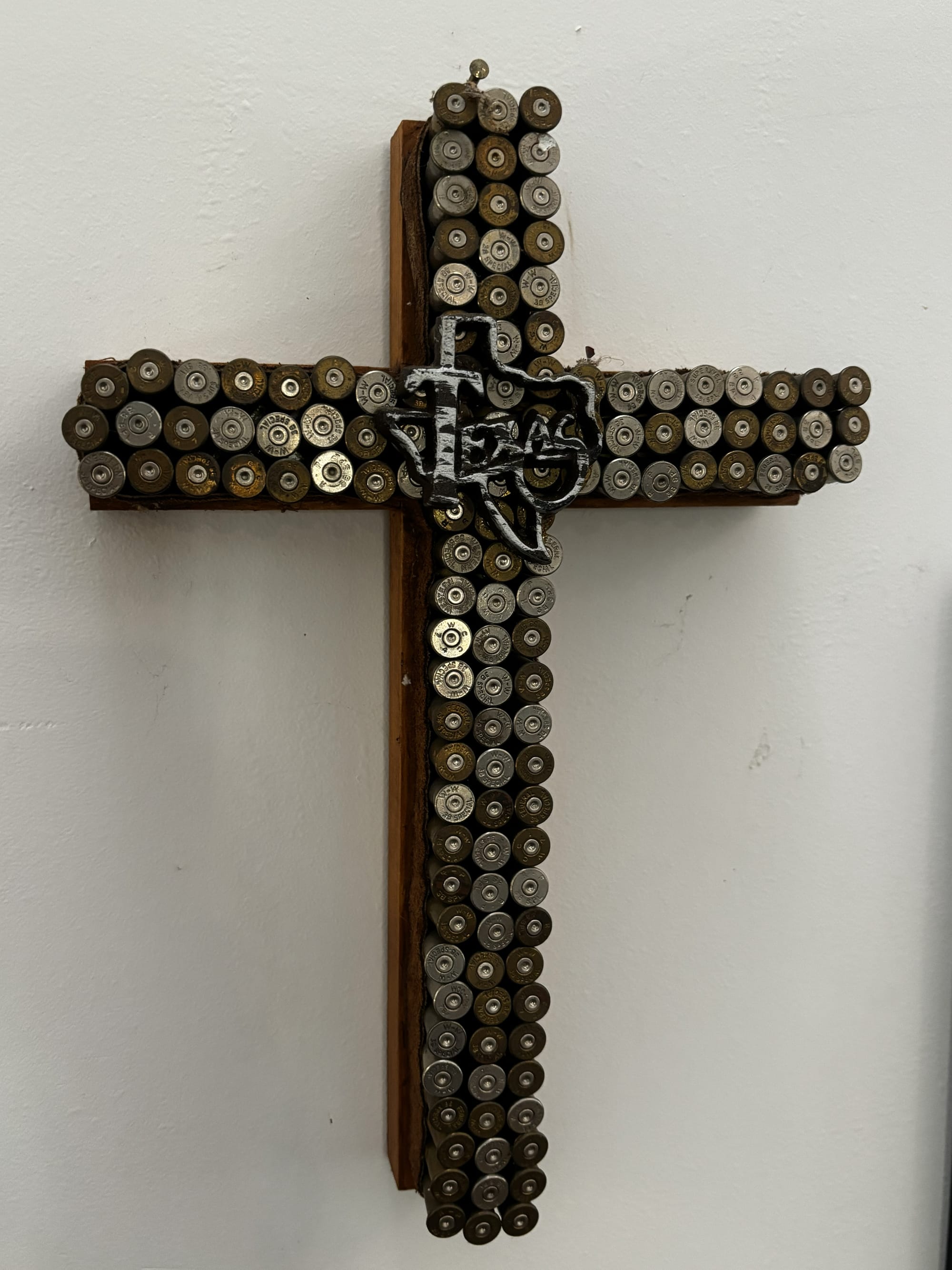
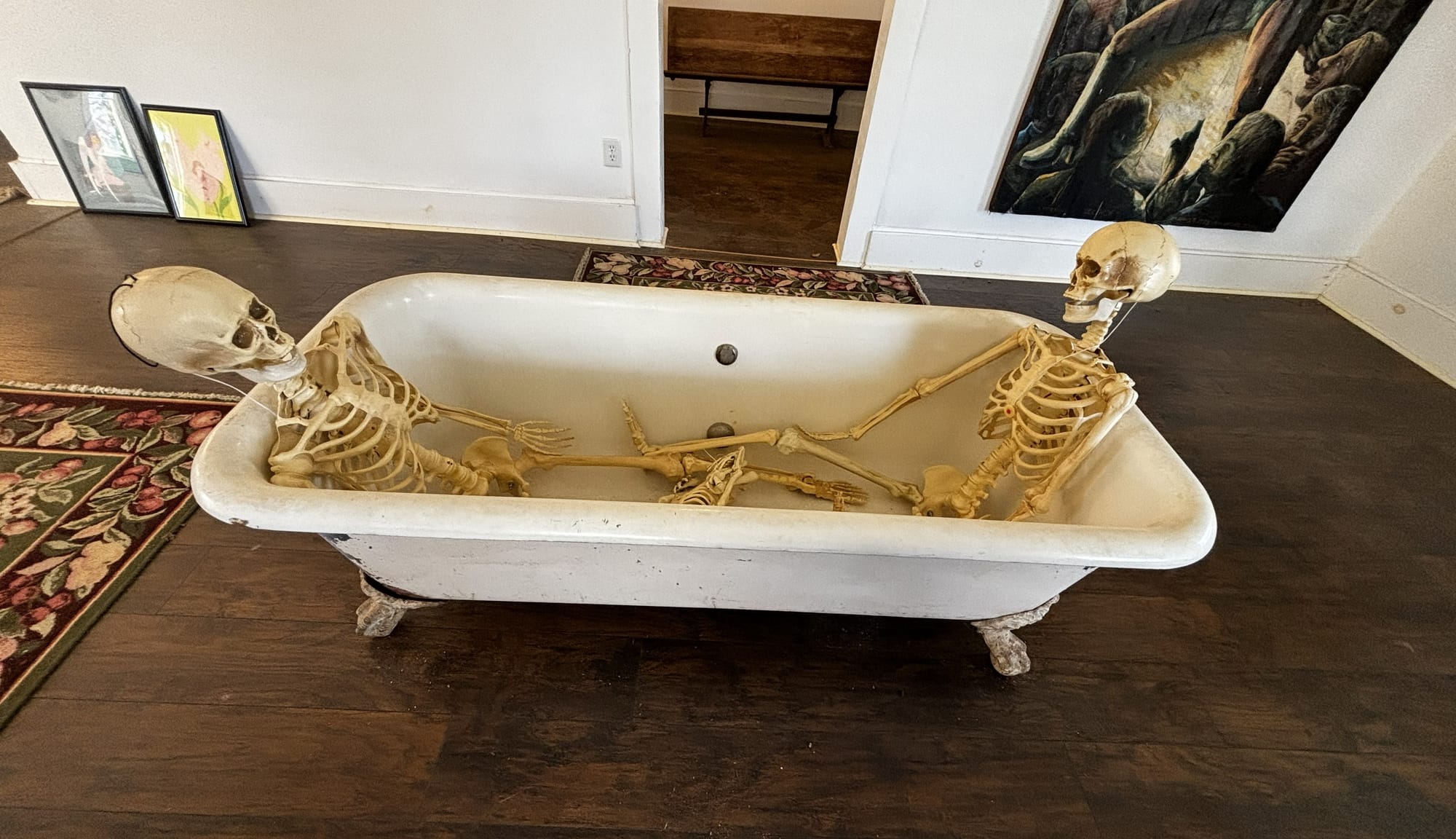
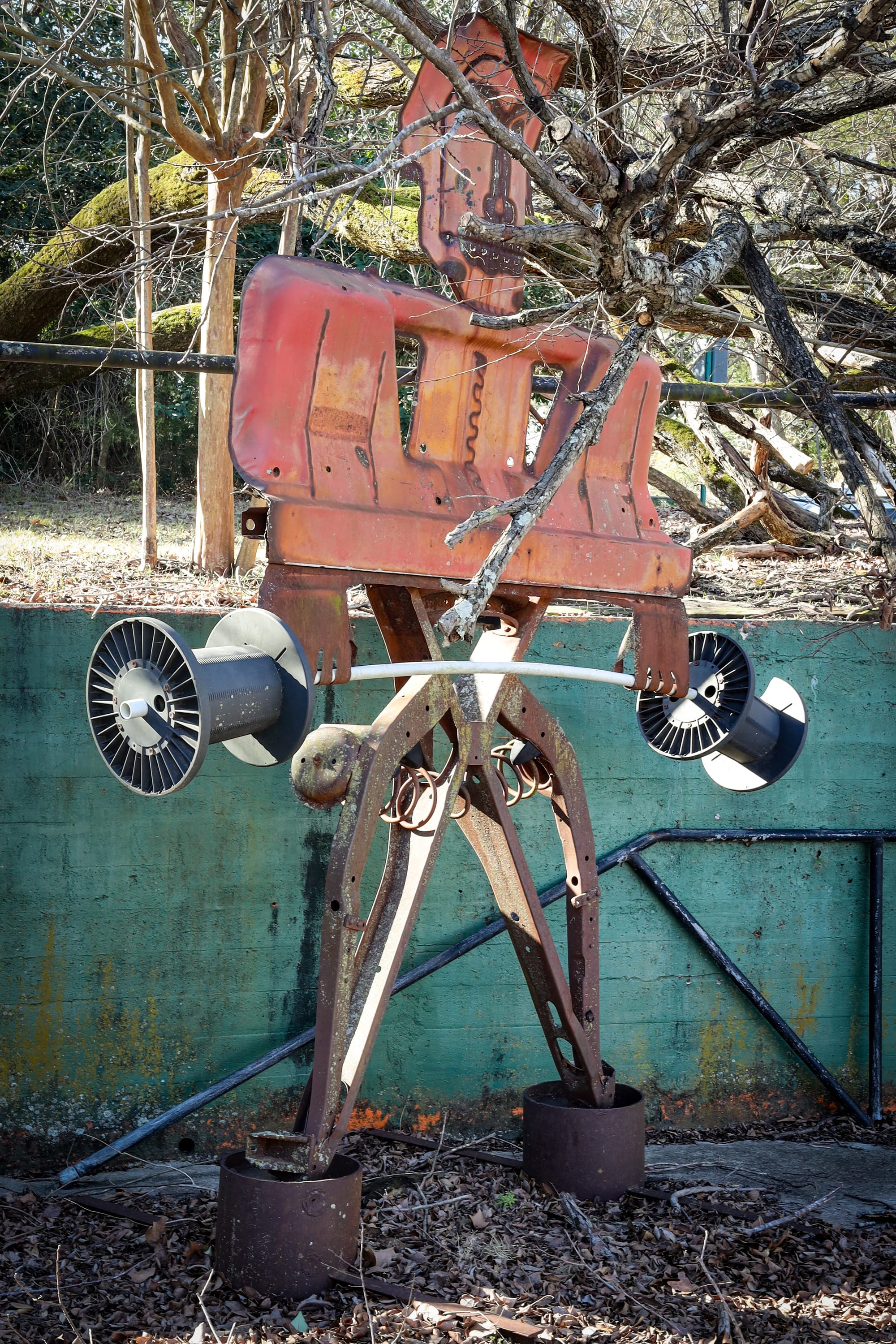
Clockwise from top left: a bullet cross, a blood-letting tub, and a metal sculpture, found in (or in front of) the Museum of Folk and Outsider Art, the Museum of Texas Art, and the Texas Furniture Museum. Photo credits: Mary-Brett Stringer (the first two photos), John Stipe (the last photo).
You want artisanal objects, like furniture or stoneware? The Museum of Texas Furniture's 460-piece collection of handmade Texas furniture, mostly from the 19th century, includes a desk reportedly owned by Sam Houston. Among much else, this giant space contains door hinges and doorknobs laid out perfectly on rows of tables, and a row of children’s beds complete with vintage dolls and handmade quilts.
In the same building, the Museum of Texas Stoneware contains a huge collection of Texas stoneware, including pieces from notables like James Prothro, who brought the distinct ash and clay glaze method to Texas in the mid-1800s. The building also contains a massive library of books and publications about Texas.
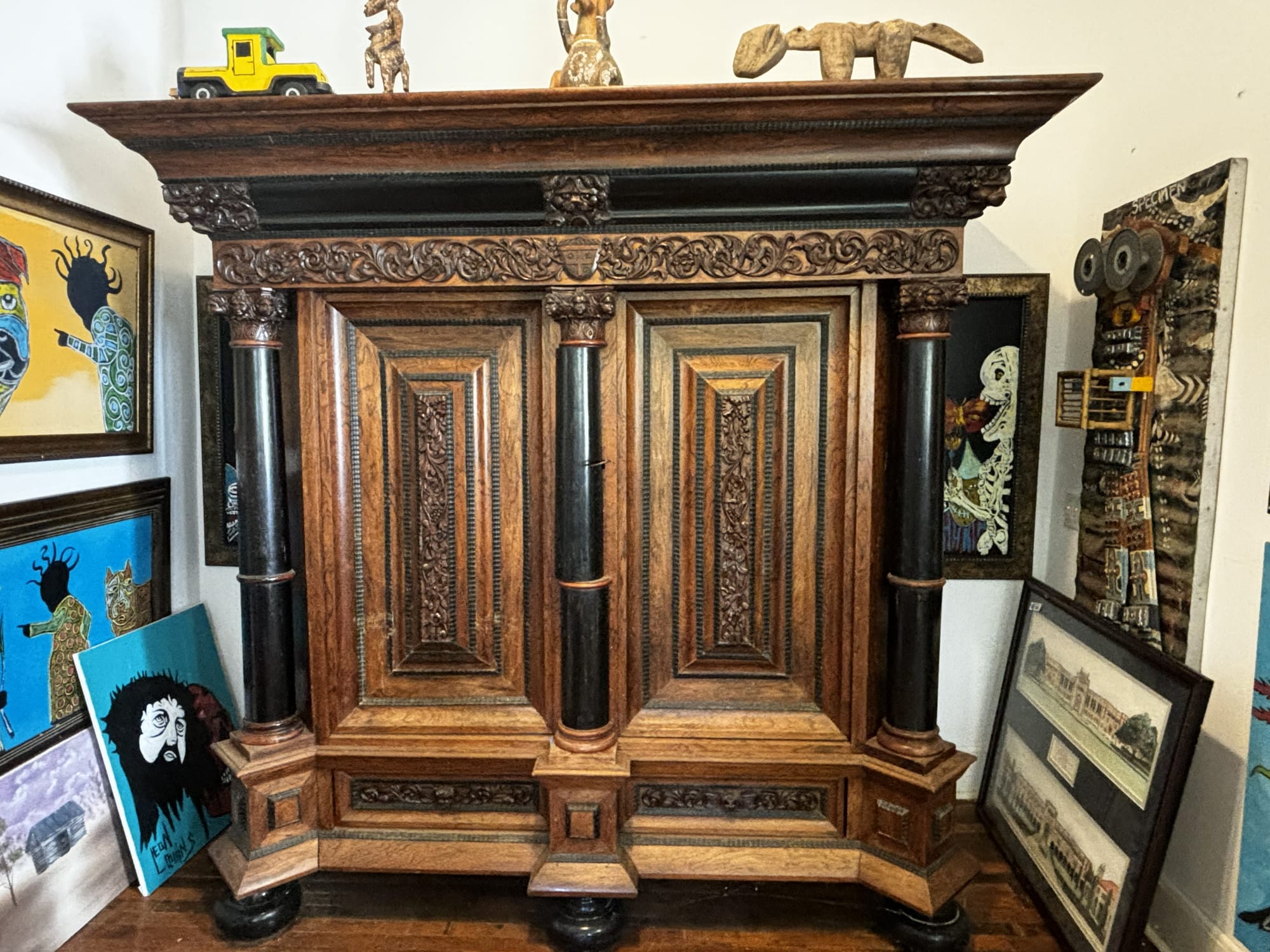
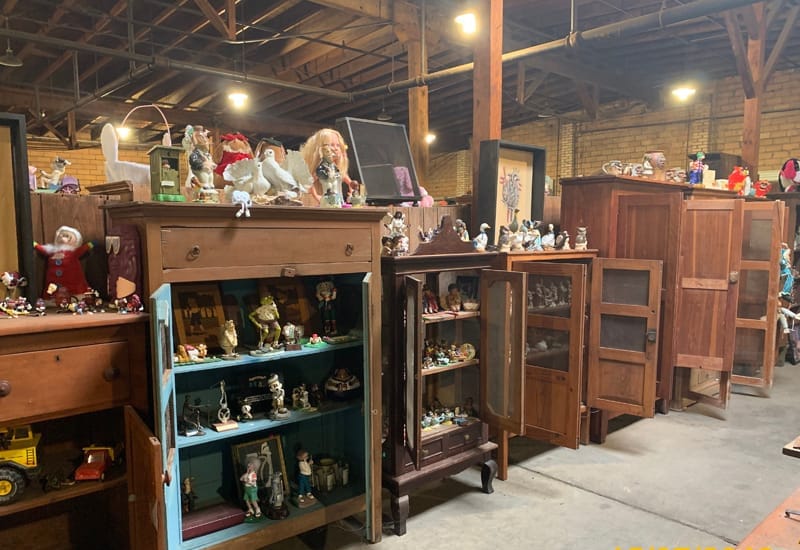
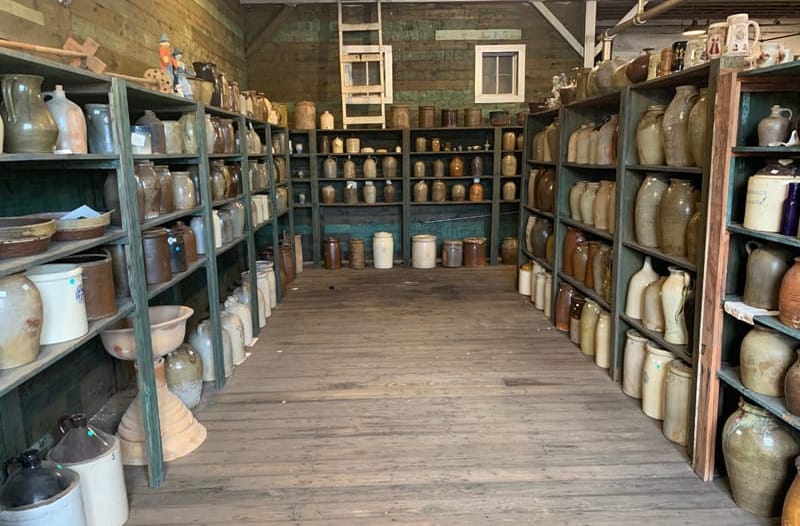
A hutch from the movie Gone with the Wind inside the Museum of Folk and Outsider Art, hutches inside the Texas Furniture Museum, stoneware inside the Texas Stoneware Museum. Photo credits: Mary-Brett Stringer (photo on left), Ethician Foundation (photos on right).
Russell doesn't collect just art. The Furniture Museum also has a bevy of Americana tchotchkes filling up several rows of hutches. Meanwhile, in the Museum of Genocide and Atrocities Perpetrated Against Native Americans, there is an impressive collection of Native American artifacts, which Russell terms “Indian kitsch,” that are intended to reveal the evils of colonization. Some of these objects date back 15,000 years.
There's even a palace
In addition to the museums on University Ave., Russell has one in The Avenues, where he and Suzanne own a large block of real estate. The 6,800 square foot Bishop’s Palace Museum at 1409 19th St. opened to the public in 2015. It resides on the grounds of the original Sam Houston homestead.
It has art from around the world and close to home. You will find works by former students at Sam Houston State University and prisoners in the Texas Department of Criminal Justice, as well as several from the renowned Texas folk artist, Rev. Johnnie Swearingen, which were done in exchange for nine months of rent.
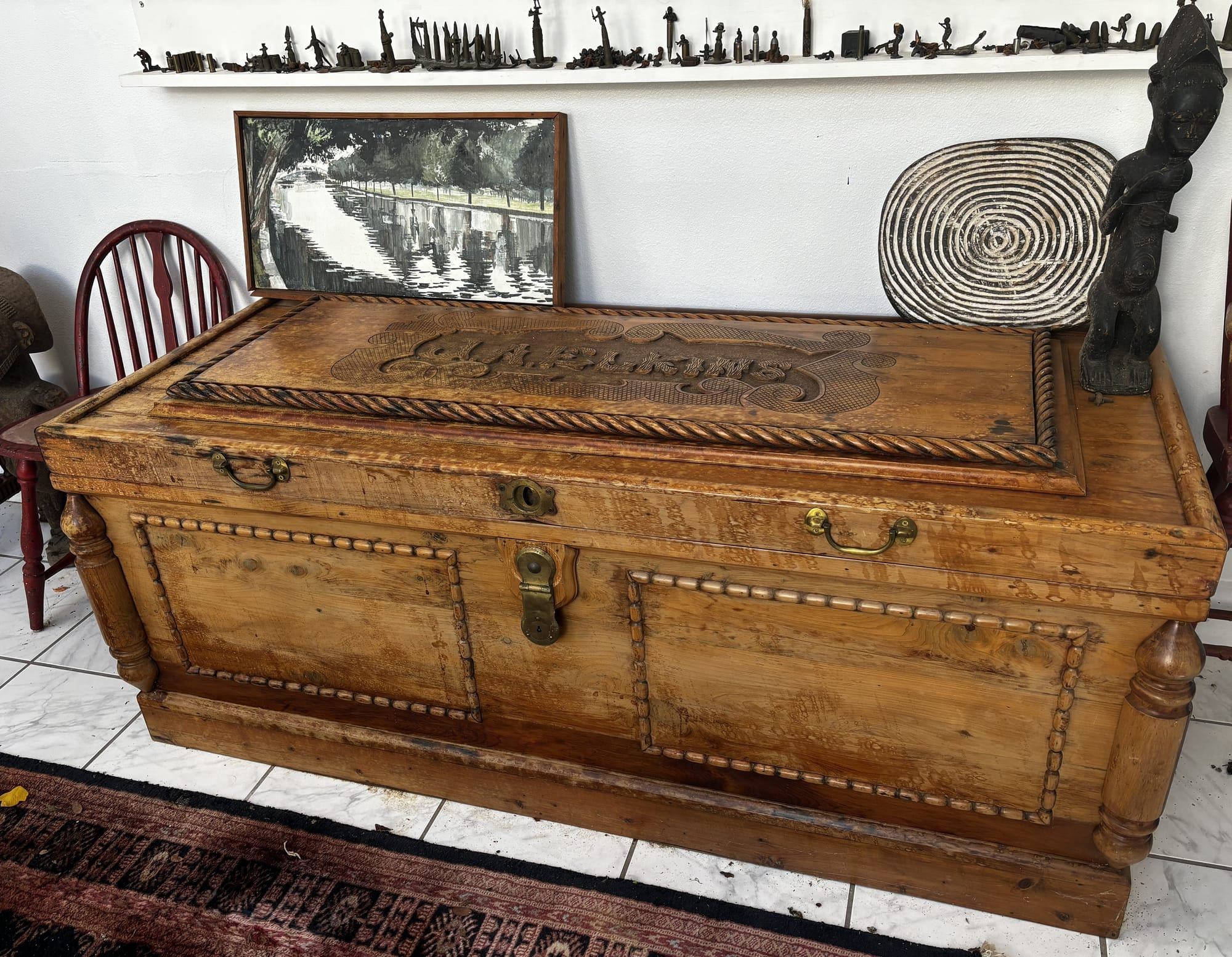
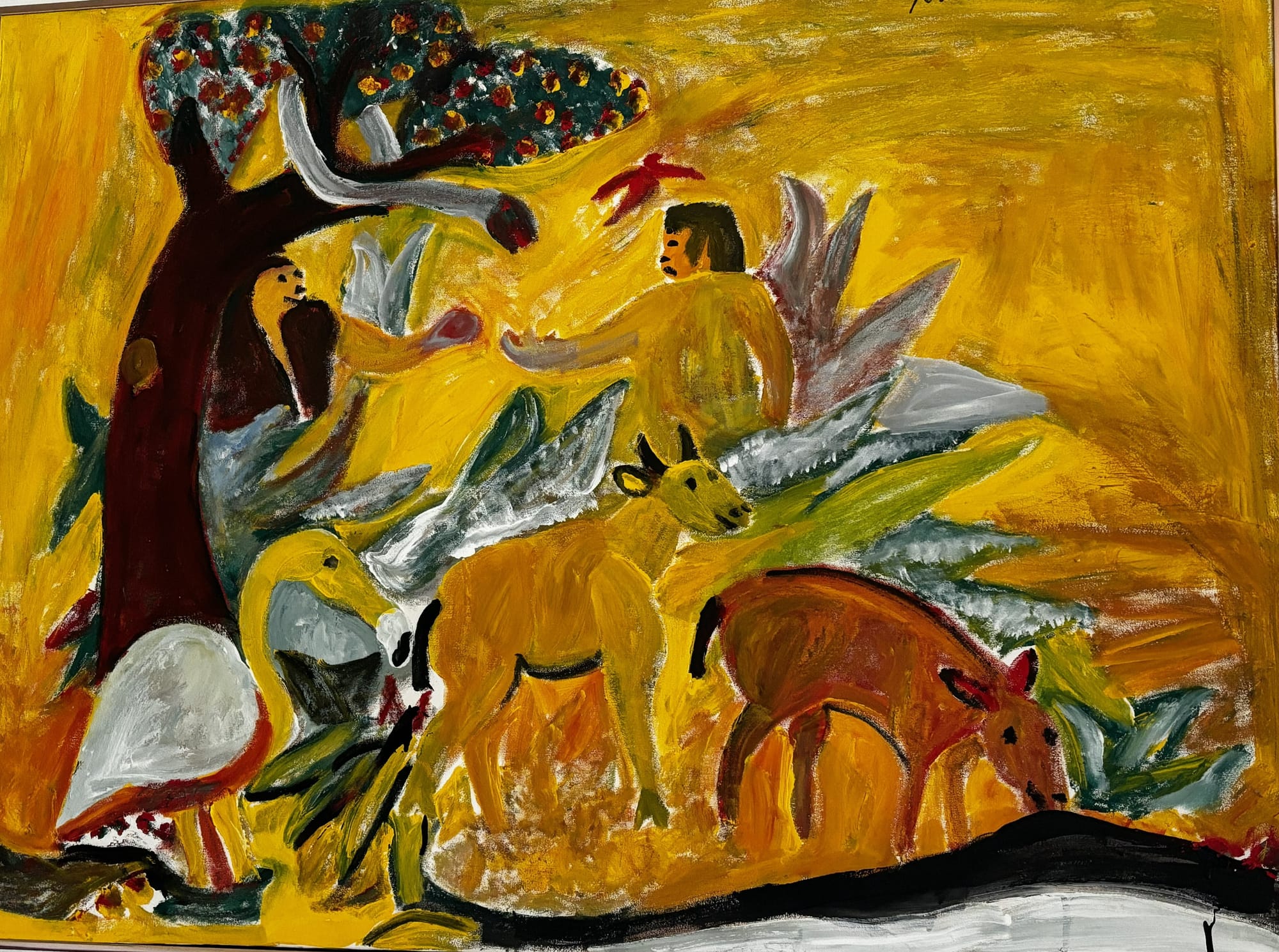
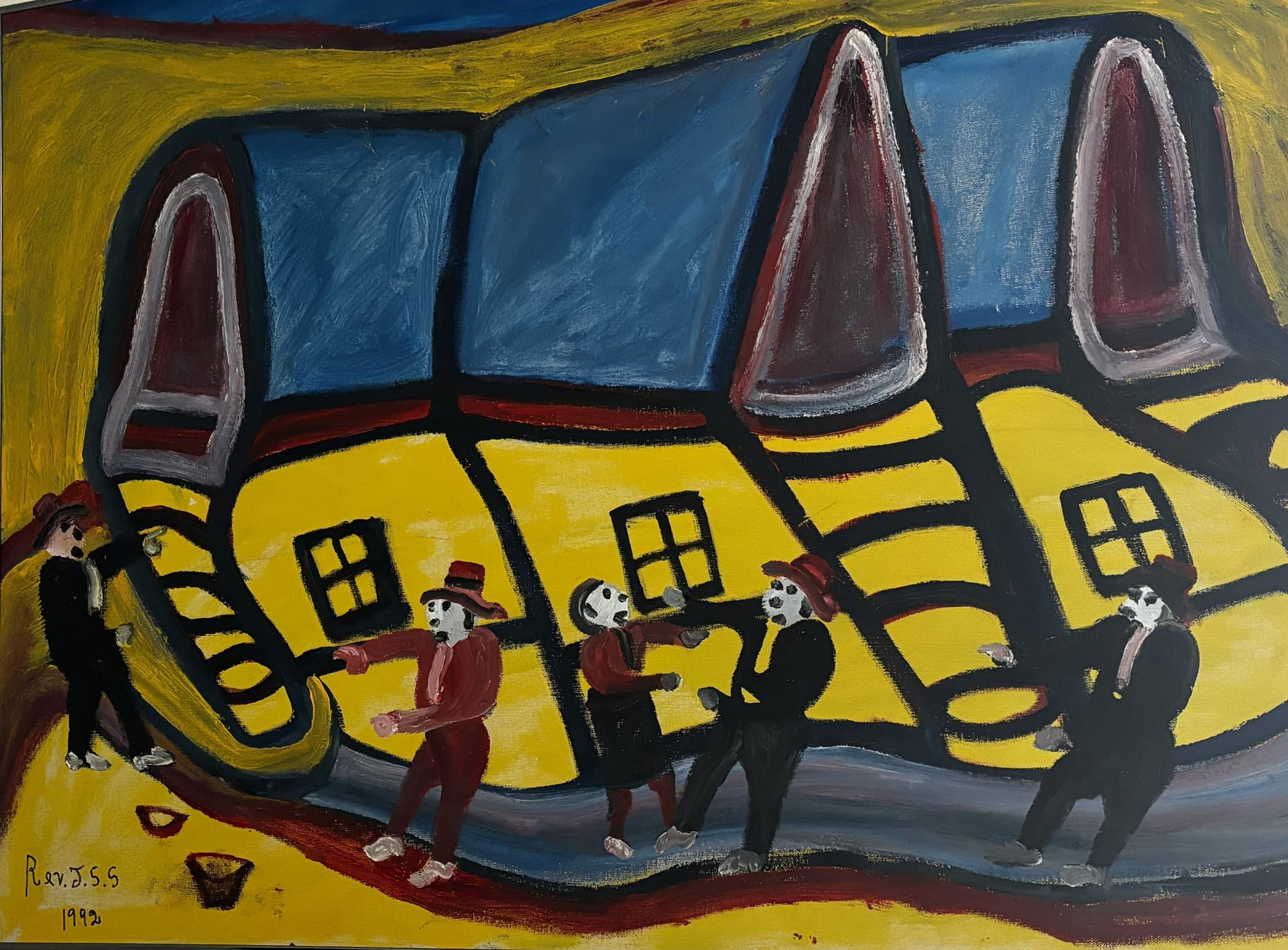
Jude Elkin's cedar chest and close-ups of two paintings by Johnnie Swearingen. Photo credits: Mary-Brett Stringer.
If the Bishop’s Palace seems less like a museum and more like a home with a whole lot of art, you're not wrong. Russell grew up and raised his family there. He and his father began constructing the house with hand tools in 1951. “I was on the two-story roof at age six nailing the shingles,” Russell recalls.
He doesn't want art that tastes good, he wants art with good taste
Russell knows his own mind, and this is especially true when it comes to art. The theme of preservation, so visible in his renovations along University Ave., applies here too. “I like art that will last for thousands of years,” Russell shares.
His taste in art had a long and fruitful gestation period. In addition to growing up with an artist mother – some of whose paintings still reside in The Bishop's Palace – the family owned a villa in Italy, where he was exposed to ancient civilizations with art and craftsmanship that have stood the test of time.
On his and Suzanne’s 100-day honeymoon in 1967, they traveled 17,000 miles in France. His bride, with three Leica cameras from her groom, got special clearance to photograph the country’s best works of art. Suzanne shared those photographs when they returned, and it made them their first million.*
Russell's taste also developed through his interest in archaeology, anthropology, and cultural ecology. Despite access to some of the world's best art houses, he is not a strictly high-society collector. He can be found at garage and estate sales, craft fairs, and thrift shops more regularly than at art galleries or auctions.
Russell doesn't seem to care what is trendy or in vogue in the world of art – only what he thinks is good. The end result is one of the most eclectic collections of art in the state.
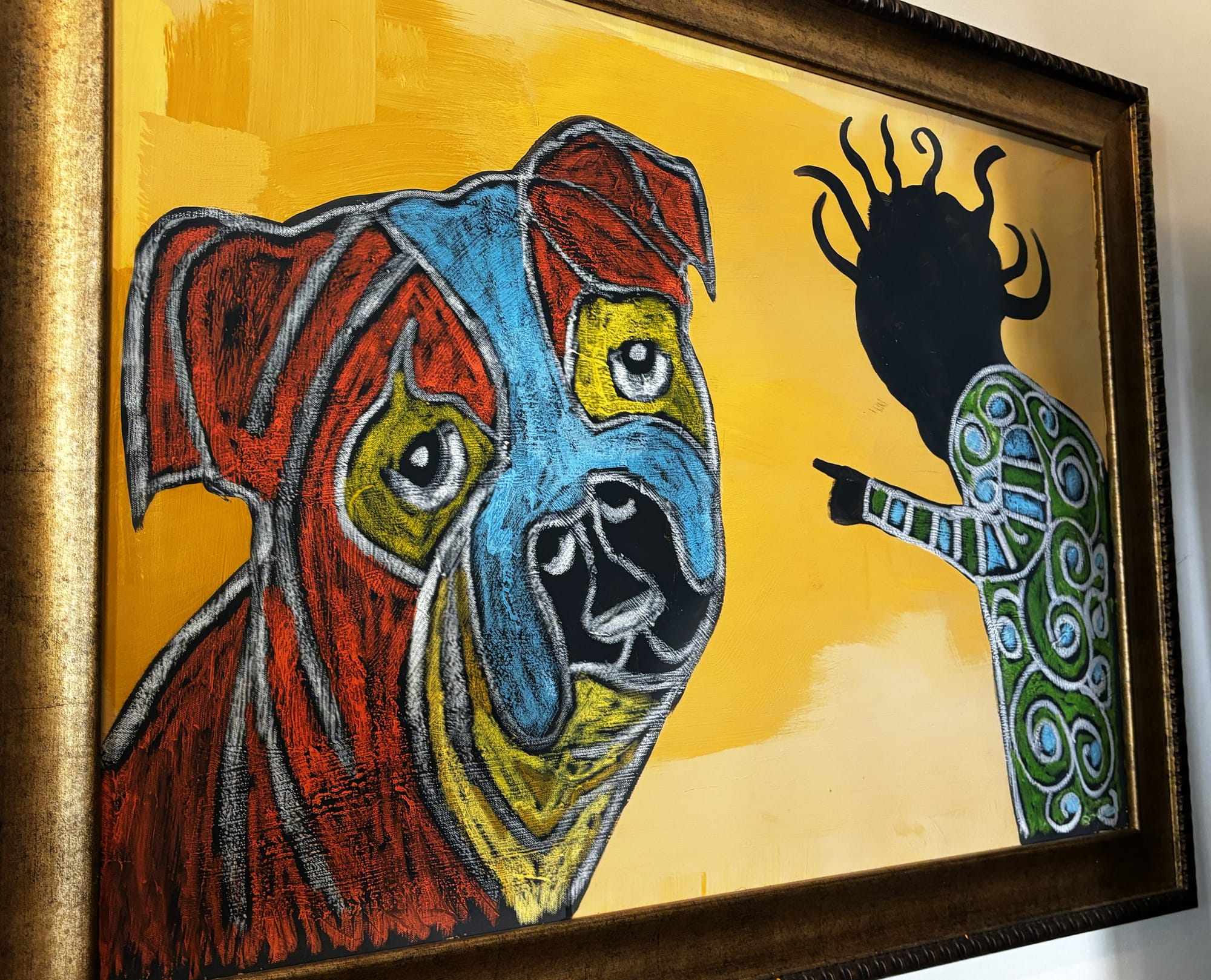
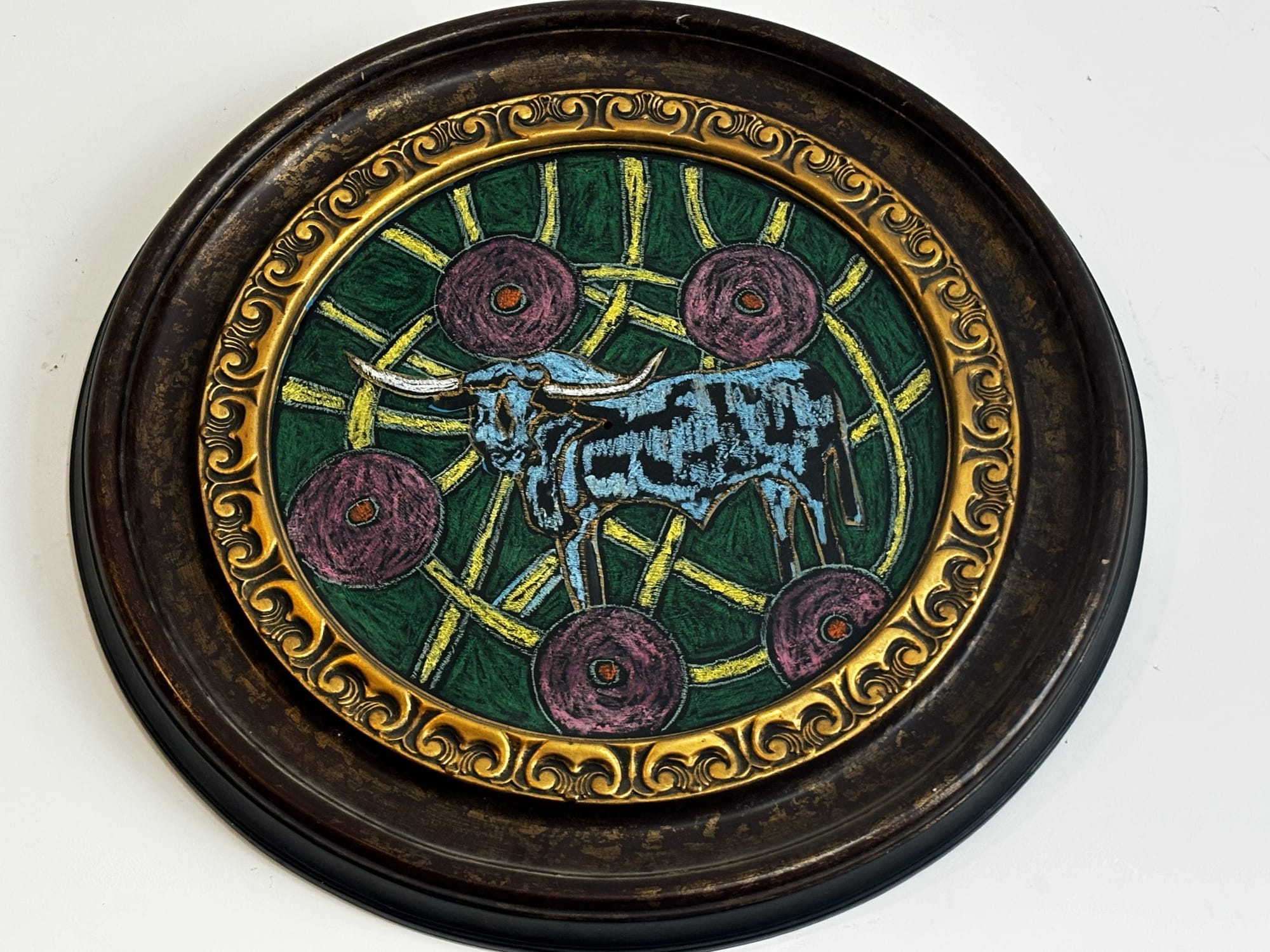
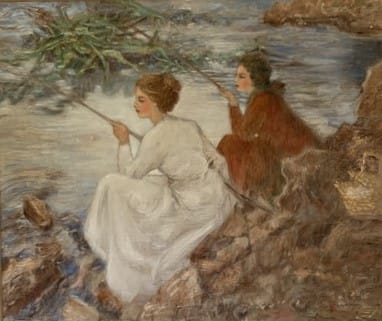
Russell's tastes run the gamut from traditional to contemporary, and everything in-between. Photo credits: Mary-Brett Stringer (top two photos), Ethician Foundation (bottom left), John Stipe (bottom right).
As such, it nicely complements other, better-known art displays in town. The city-run Wynne Home often displays traditional art, while the Art Department at SHSU favors the opposite: contemporary art, which is far more abstract.
Russell's art collection, like the prisoner art in the new Imerj gallery downtown, doesn't lie in either camp alone. He never excludes artists' work because of their style, medium, training, name recognition, or background. As a result, the full spectrum of art styles are represented in Huntsville. Few towns our size can boast such luxury.
This article is the second in a series. The first, about Russell's efforts preserving the buildings that house these museums, is here. The third article, about visiting these museums, is here. You can subscribe to The Huntsvillan for free using the pink "subscribe" button at top right and receive occasional updates when new material is posted.
* They also brought back some Neanderthal rocks and artifacts that you can visit in The Bishop’s Palace.