Sidewalks to nowhere: the tricky business of getting around Huntsville on foot
The experts had their say. What did the city do?
The evening of November 17, 2023 was a tough time to be traveling around Walker County without a car. At 6:44 pm, a pedestrian was killed along Hwy. 75 in New Waverly. Not half an hour later, at 7:09 pm, a bicyclist was killed by a distracted driver on FM 2821 in Huntsville.
These aren't isolated occurrences. In a typical year, Walker County will have two or three pedestrian fatalities and perhaps one biking fatality. Most of these take place outside Huntsville city limits, where speeds are higher and shoulders narrower. Still, getting around town on foot can still be a challenge.
Like most places in Texas, Walker County is car-oriented. But some people don't have a car and others prefer to walk or bike when they can, part of a resurgence in "non-motorized transportation" throughout Europe and North America. To be fully walkable, Huntsville has work to do.
Now you see them, now you don't
Huntsville's sidewalks are patchy – often present, but with substantial gaps. Depending on your route, walking can be a delight or an ordeal.
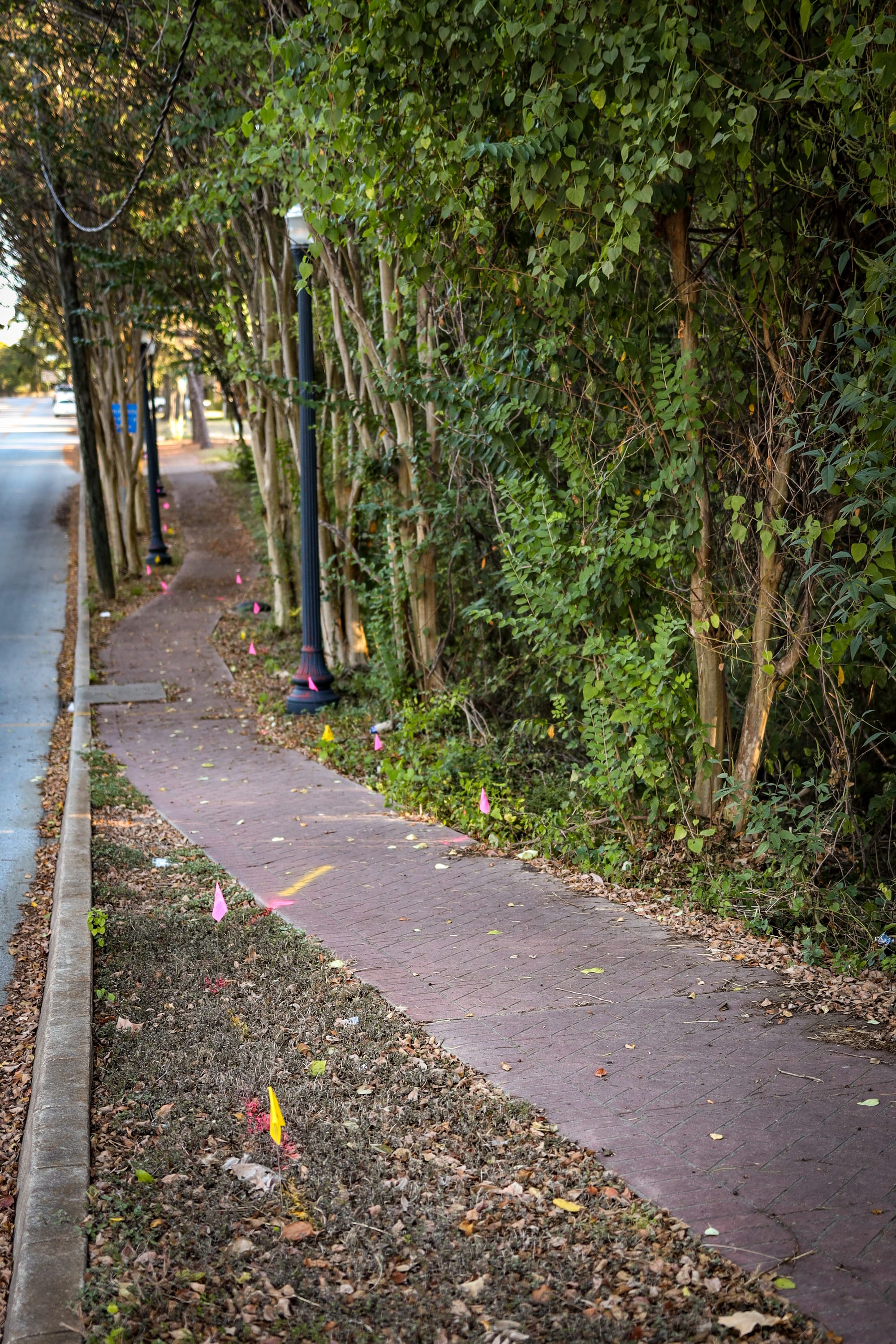
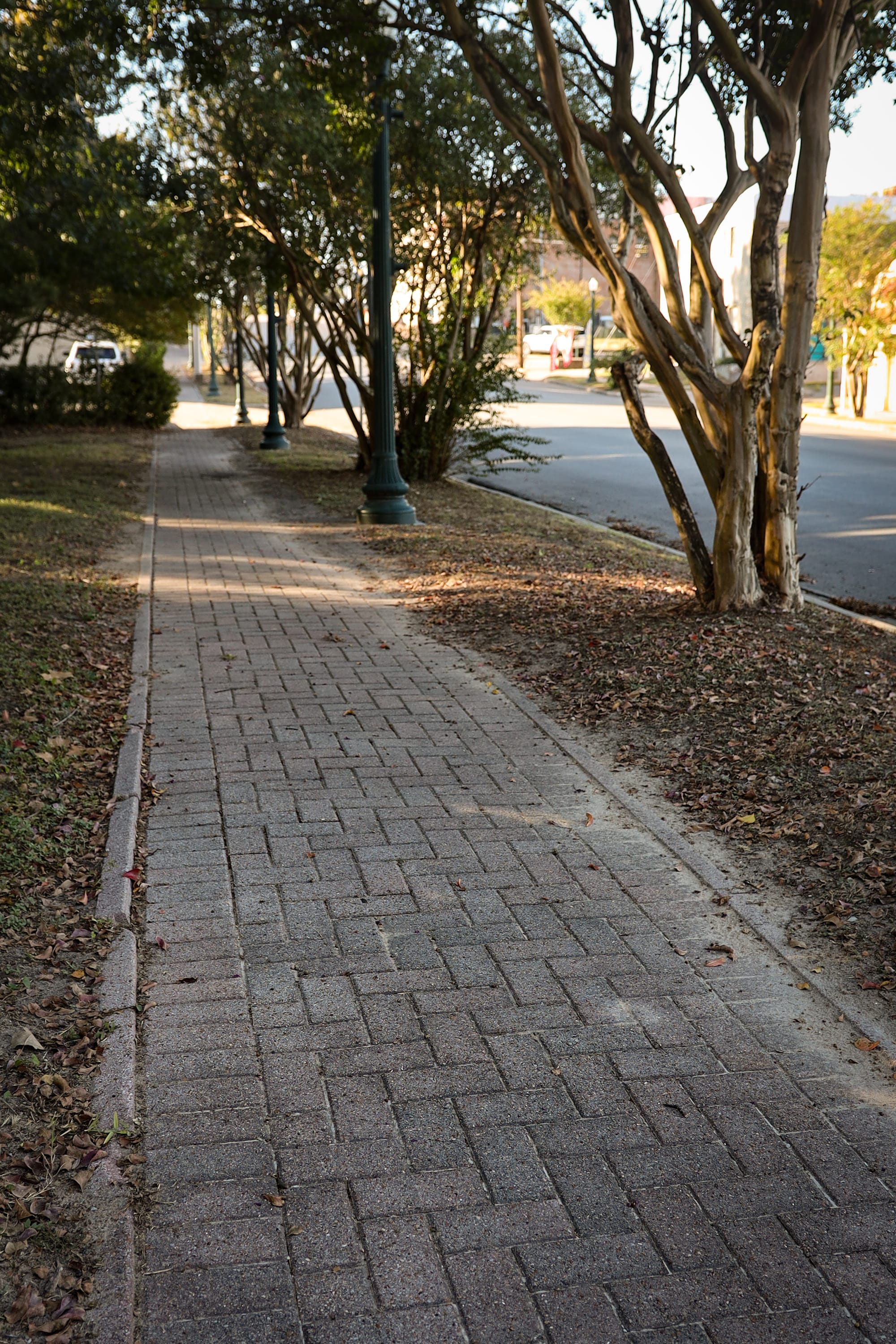
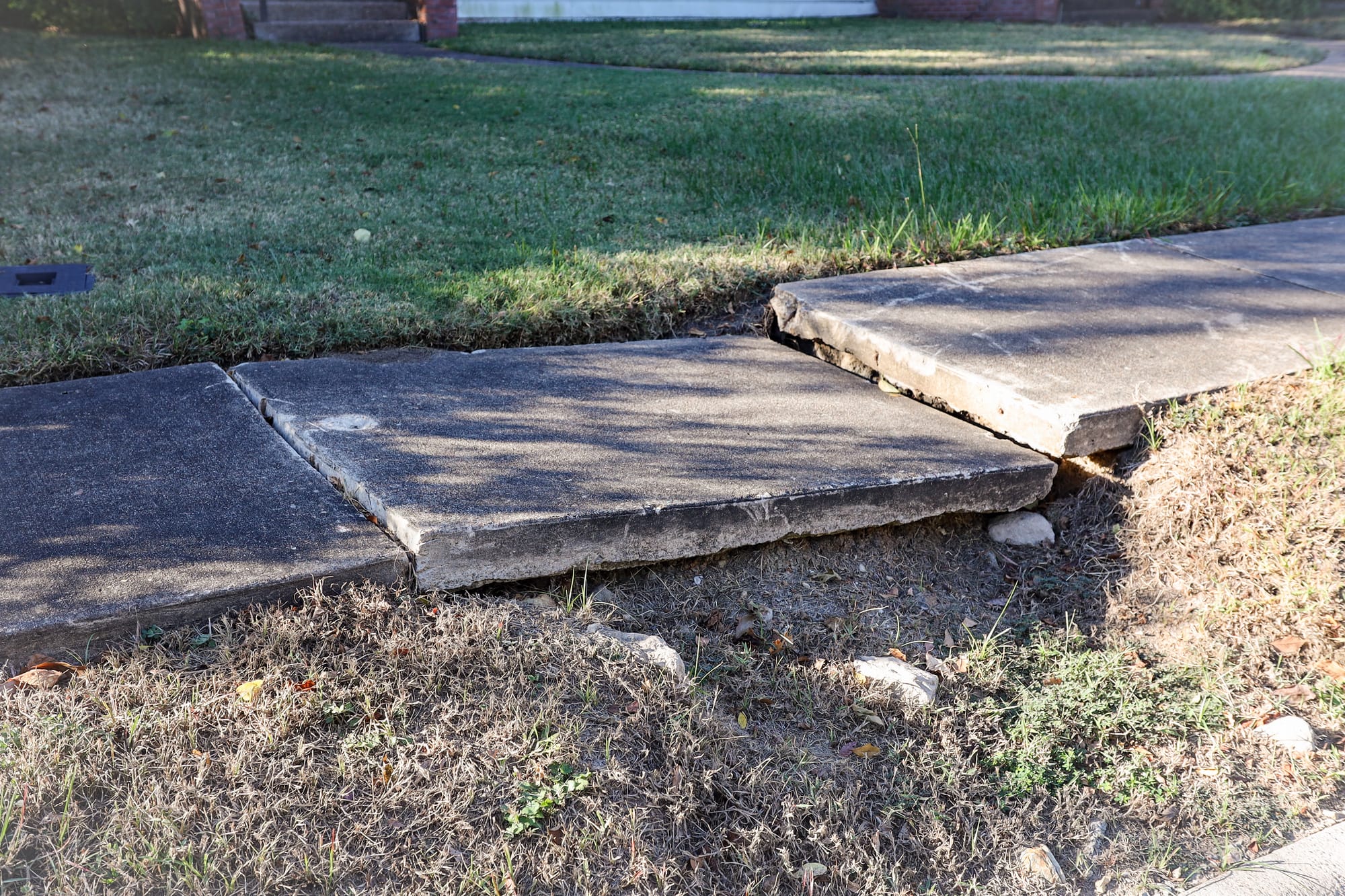

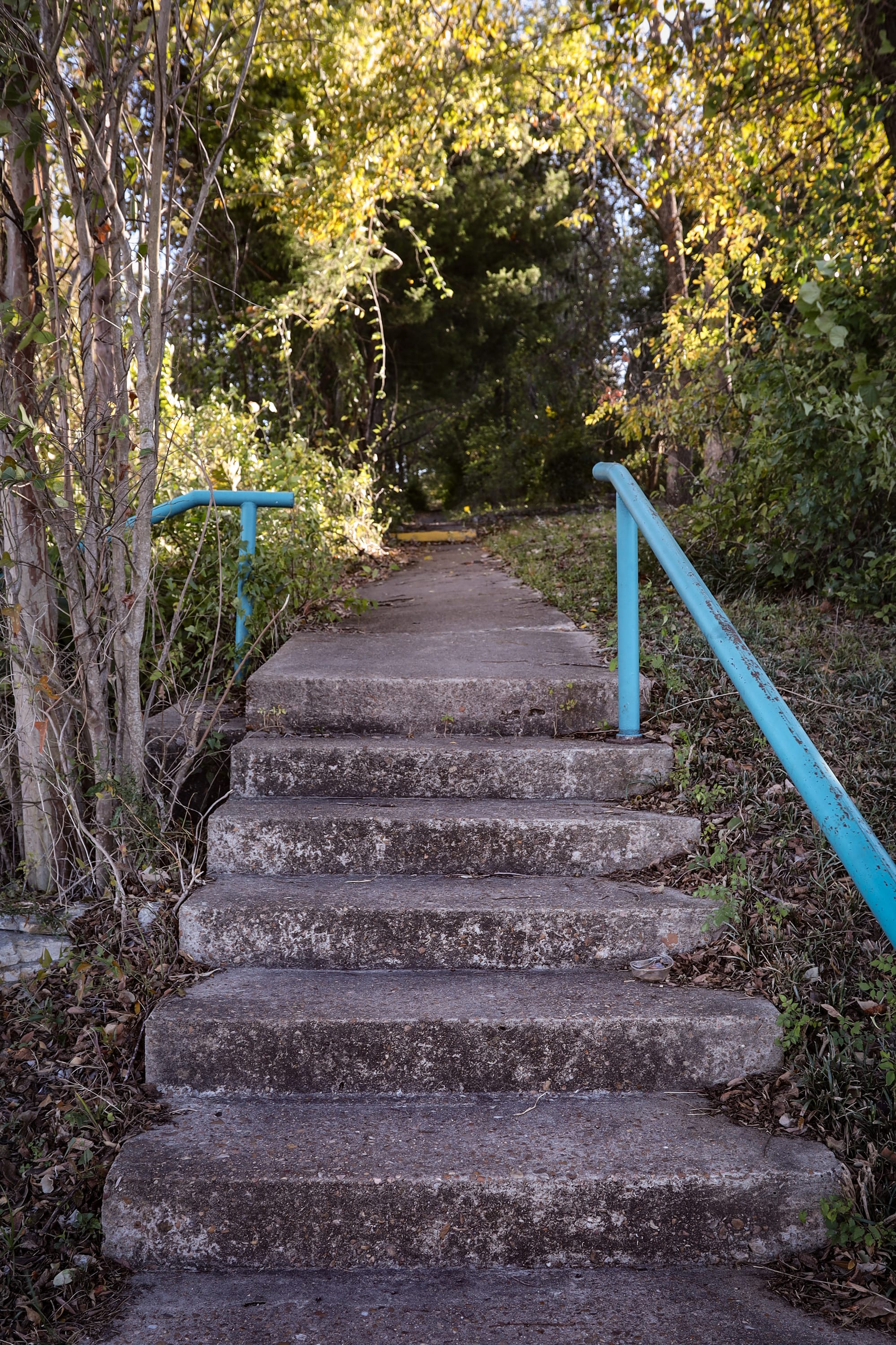
Huntsville has some beautiful sidewalks that are sometimes in need of repair. Photo credits: John Stipe.
Some main arteries are lined with sidewalks, like Sam Houston Ave. or Veterans Blvd. When they aren't, you can sometimes wind through lightly-trafficked neighborhoods like The Avenues instead.
Other times it's tougher. Some sidewalks are in poor condition, as in areas near downtown, while others come and go, as along Normal Park Dr., Bearkat Blvd., and Sycamore Ave. Both problems occur along 11th St.
For many of these roads, there is no good alternative route. You're stuck. This is how non-driver Nick Ransford experienced it during his decade in town:
Huntsville has sidewalks to nowhere. They abruptly end in the most illogical places or randomly switch sides of the street. Many places along 11th St. have no sidewalks. I was literally walking through grass and mud and wading through parking lots to get to work.
Now, did Ransford package his comments in a glossy brochure and receive beaucoodles of dollars for his efforts? Of course not. That's what consultants are for.
In 2019, mindful of the hand that was feeding them – the City of Huntsville – those consultants put the exact same thoughts into bureaucrat-ese:
Pedestrian Improvements. As noted in previous sections, multiple corridors have sub-standard, obstructed, or discontinuous sidewalks. Some streets without crosswalks have desire lines where people walking have made natural paths that prove a need for sidewalks.
This statement was part of a giant transportation master plan that examined roads, sidewalks, biking – the works, providing a blueprint for years of transportation improvements in the city. That report is now six years old. What's happened since then?
Going nowhere fast
Since 2019, some progress has been made. There is a nice new sidewalk along the northern part of Martin Luther King, Jr. Drive leading up to Huntsville Elementary, and the revamped I-45 access roads now have sidewalks so wide two horses can fit side by side. And last month the sidewalk on Veterans Blvd. received major repairs that were desperately needed.
But this does little for people closer in to town, where the same gaps have persisted since that 2019 master plan. These are so numerous that this writer has – based on personal experience – trimmed it back to the highest-priority needs, shown below.
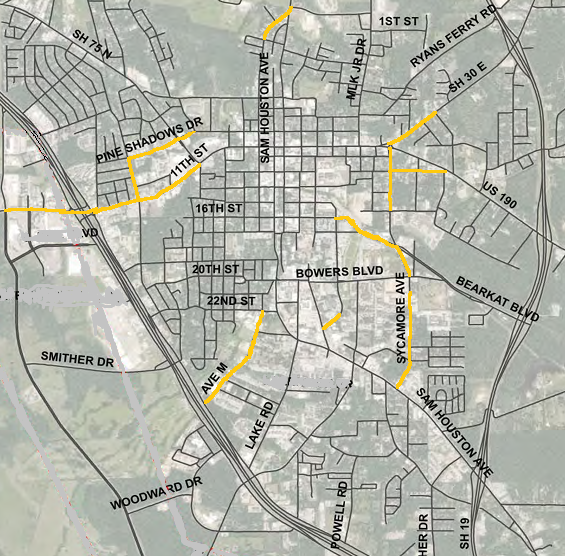
These "missing sidewalks" are spread all over town, generally where roads are narrow, speeds are higher (for town driving), and alternative routes are not available. Walkers frequent many of these routes.
Huntsville is not yet a pedestrian-friendly town, and it's not getting there quickly.
You can't spend money you didn't get
Money is a big part of the problem. Building sidewalks in Texas is shockingly expensive – $860,000 per mile on average.
Fortunately, federal dollars are available specifically for sidewalks and bike paths in small and medium-sized towns. These grants, available every two years on a competitive basis, are administered by the Texas Department of Transportation. Since 2020, six nearby cities have won $18 million, including $5.5 million by little ol' Coldspring.
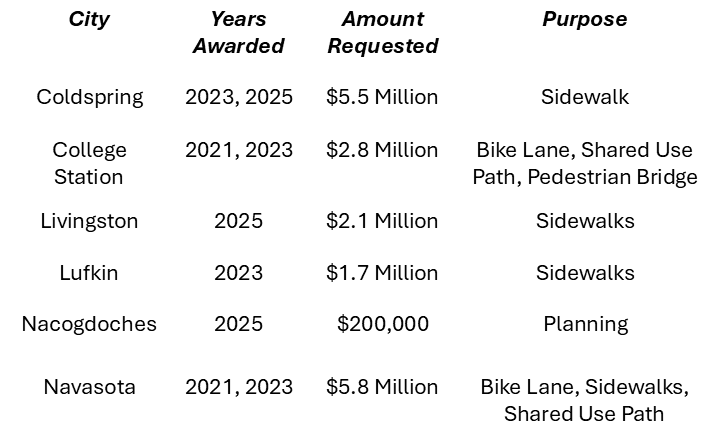
The City of Huntsville applied in each of these cycles. But these grants aren't easy to get – free money always draws a crowd – and the city has struck out each time.
Part of the problem has been proposing projects with little impact on safety.
The centerpiece of this year's application – and part of 2021's, too – was a 12 foot wide "multi-use" pedestrian/bicycle path along University Ave. between Sam Houston State University and downtown. It's an imaginative idea, part of a larger scheme that would turn that stretch of road one way heading north, with Bearkat paws crawling south down the middle of the street.
But this wide, lightly-trafficked street already has adequate sidewalks. This writer bikes down it multiple days each week on the way to work; it's the least worrisome part of his whole ride.
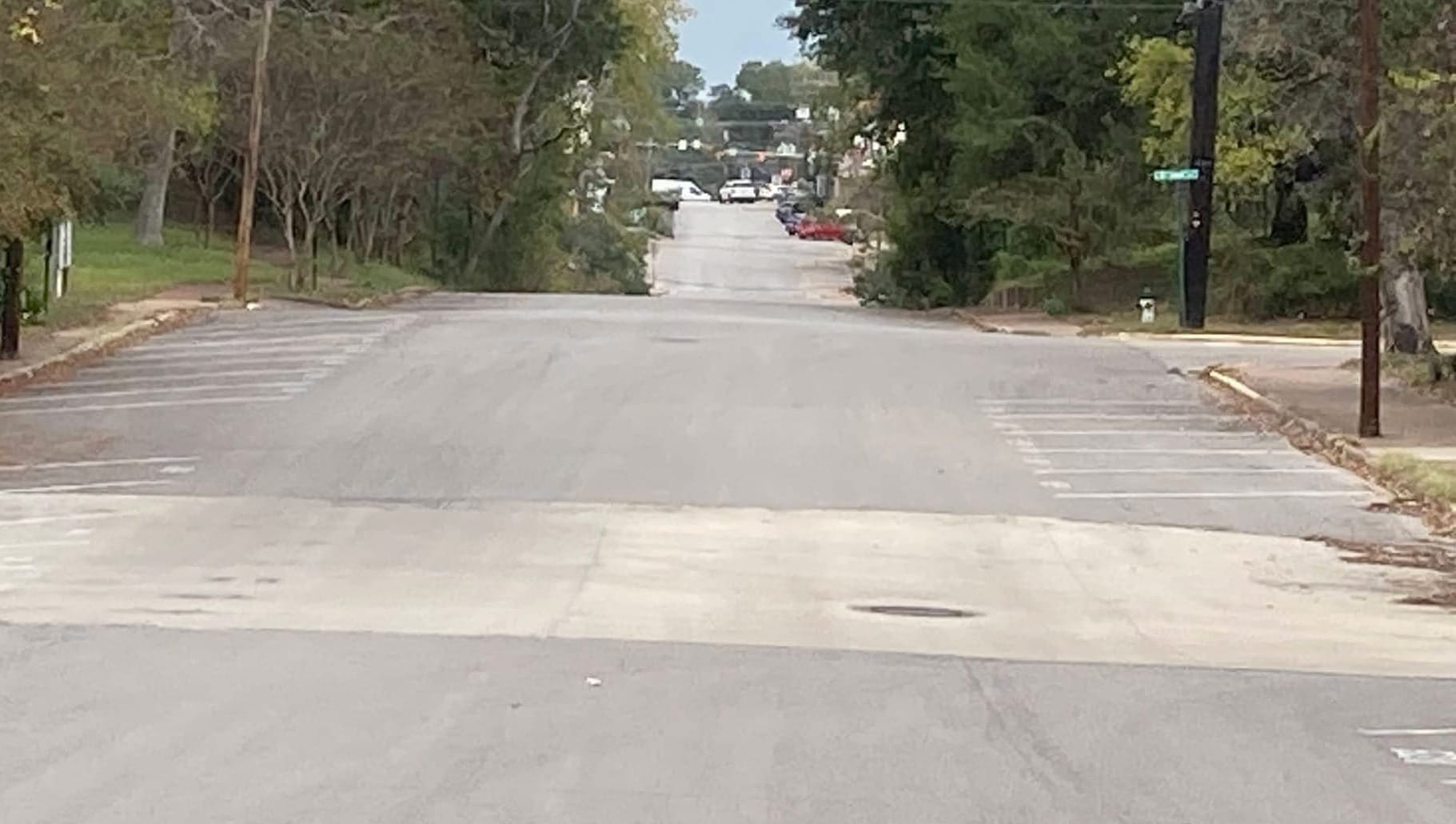
The master plan agrees. Its suggested sidewalks did not include this road, and a section focused on University Ave. determined that it "does not show any major issues." In contrast, the plan encouraged sidewalks along Sycamore Ave. in the medium term and (more) along 11th St. in the long term.
The master plan did indicate that wider sidewalks on University Ave. were possible if it became one-way. But this was characterized not as necessary, just nice. And "nice, not necessary" won't prevail in a competition in which most projects aren't funded. This year's proposal had an uphill climb from the start.
But wait! There's more!!
That master plan wasn't bothered by University Ave., but it went nuts about something else. The most used crosswalk in Huntsville is also the most dangerous. That story appears Monday (now published here).
This year's grant application was joint between the city and Walker County, with Precinct 3 Commissioner Bill Daugette as the point person. Daugette asked the author of this article for a letter of support, which he provided. Comment was invited from Daugette and Huntsville City Manager Scott Swigert for this article, but they did not respond.