Out of their league?
Sam Houston State got in over its head with its troubled foray into big time college football.
Orange balloons and streamers were all around at last July's opening of the renovated Bowers Stadium. Replacing the press box was a massive structure perched above the bleachers of Sam Houston State University’s football home. The luxury suites inside are a new revenue generator now common in college football.
“I know what this will do for our fans, for our students, for our brand,” said SHSU President Alisa White. “My whole goal was to really elevate the fan experience. Bearkat fans are avid. They deserve a phenomenal experience, and that’s what we’re going to give them.”
Athletic Director Bobby Williams was equally enthusiastic. “When you walk in, you’ll see how much [the new stadium] changes who we are as a university, as an athletic program and as a football program. The things that it’s going to do for us... is very dramatic."

SHSU's head football coach, Phil Longo, gushed similarly at the Conference USA Football Kickoff in Arlington the previous week. Longo could be heard telling anyone who would listen about the boost in funds available for Sam Houston to attract a higher caliber of football player. While 2025 had caught the Bearkats off guard, this year would be different.
White, Williams, and Longo had big plans for SHSU football. Unfortunately, there were important people getting in the way: themselves. Perplexing decisions by all three have invited the troubles the program is now experiencing. The athletic department has been caught off guard by the shifting tides of college athletics and is now desperately racing to catch up.
The coach
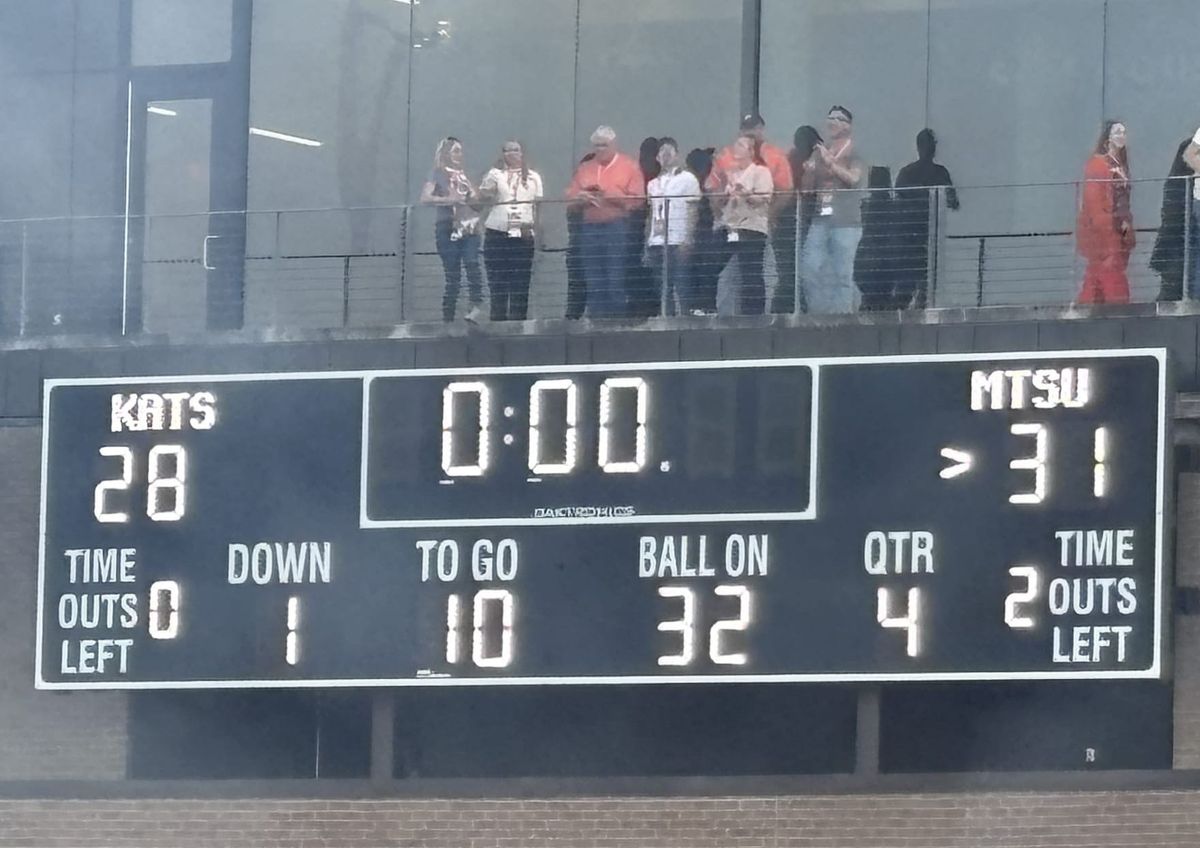
On October 27, Phil Longo walked off the field for the last time as Sam Houston's head football coach, before being fired later that week. The Bearkats had just lost their fifth straight game, an anemic 24-3 defeat at Missouri St., dropping Longo to 3-17 in his time at the helm. The offense had scored only 47 points over that five-game stretch.
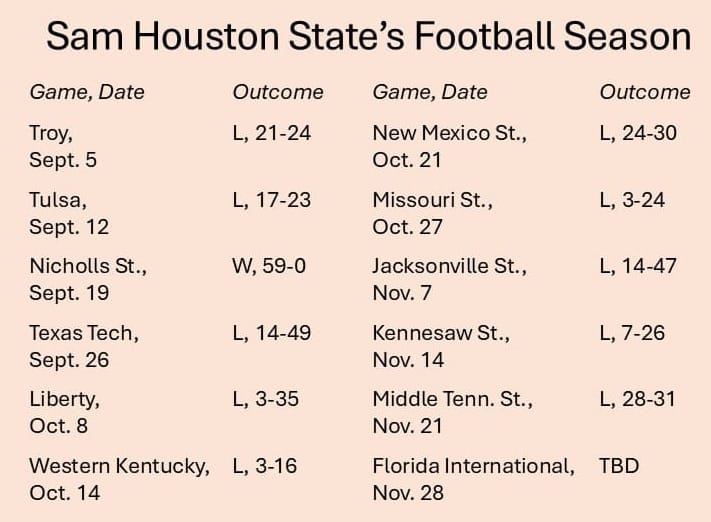
It wasn't supposed to be this way. While 2025 had caught the ‘Kats off guard, this year would be different. College football's relatively new "transfer portal" lets athletes change schools as often as they wish. This meant rosters could be overhauled overnight, a quick way to wash off the stench of 2025's 2-10 campaign.
With a better supporting cast for his quarterback, sophomore Landyn Locke, Longo would execute his famed Air Raid attack, patterned after his mentor, Texas Tech coach Mike Leach, who tore through the Big 12 conference twenty years ago.
But beyond the good vibes and a renovated Bowers Stadium, was the writing already on the wall?
“2025 was his first year [Longo] was an FBS head coach,” said Christian Ekpenike, sports writer for The Houstonian student newspaper at Sam Houston, referring to the Football Bowl Subdivision, college football's highest tier.
“This is the same man who got fired from his offensive coordinator job at the University of Wisconsin… for him to get fired as a play caller and [then] hired as a head coach who is calling the plays had the potential to be a bad recipe.”
Sam Houston began the season 1-2, but those defeats were close losses to Troy and Tulsa. Everything seemed to be going well in the next game, on the road against No.11 Texas Tech. Sam Houston found itself within striking distance 21-14 at halftime.
But center Brock Sutkes and left tackle Carter Kadow were lost for the season due to first-half injuries. With a lack of depth on the offensive line, there was a domino effect on the rest of the offense. Sam Houston went scoreless in the second half that day, to lose 49-14. It would take three more games before they scored another touchdown.
“I don’t know what happened in that locker room at halftime,” said Ekpenike. “In the first half they were toe-to-toe with one of the top teams in the nation... but in the second half it felt like they forgot how to compete.”
After eleven passing touchdowns in Locke's first four games, his next four had just two. In failing to sufficiently shore up his offensive line, Longo had mismanaged Sam Houston's budget for players. It resulted in the worst offense in Conference USA, and wasted a fantastic defense ranked at the top of the conference.
As his offense struggled, Longo gave increasingly bizarre answers as to how to fix it. In addition, play calling and time management became issues. A head coach has so many game-time demands that calling plays is typically relegated to the offensive coordinator. Longo felt equipped to handle both.
Longo acknowledged play calling was an issue in the team's close loss to Tulsa. At the ten yard line with a chance to win the game, he called three straight passes and never elected to try a run.
Likewise, clock management was an issue in the close loss to New Mexico State. Longo's final timeout of the game was called early in the fourth quarter, leaving him no way to stop the clock in the closing minutes.
The athletic director
In September, athletic director Bobby Williams announced that he would step down in June.
He will leave a job he was not hired to do. The world of college athletics has changed dramatically since Williams became AD nearly thirty years ago.
Williams will tell you straight up that he was caught unprepared for this new world, where schools can pay players directly. Gone were the days of simply managing budgets and placing an emphasis on longtime head coaches. The new world of the transfer portal and payments for "Name, Image, and Likeness" demands more of a business edge. Notre Dame AD Pete Bevacua (former Chairman of NBC Sports), Stanford AD John Donahoe (Former CEO of NIKE), and Syracuse AD John Wildhack (Former ESPN executive) are good examples.
While comparable, "Group of Six" schools like Liberty and James Madison had prepared for this new landscape early, Williams was blindsided. In this volatile new world, his skills at developing programs long-term were less useful – especially at the FBS level, which SHSU joined only a few years ago.
Sam Houston's 2026 estimated player budget of $5 million is only modestly less than its Group of Six peers. But that budget is up from nearly nothing over the previous two years. That small-spending approach may have worked with the juggernaut previous coach K.C. Keeler had built in his decade at the helm, but it was woefully inadequate once Keeler left and took key players with him. It was another adjustment born of necessity in the volatile world of modern college athletics.
The president
President White's plans for SHSU fans to have a "phenomenal" experience have not come to fruition. First, of course, there is the football. With three wins and twenty losses over the last two seasons, only one team in college football has a worse record.
Then there is the stadium. The luxury suites are new, but not the seats down below. The renovations haven't been as transformative as White may have hoped.
“Its a good look for the stadium, but it’s just a look,” said Ekpenike. “There is a lot of empty space in that stadium that could have been filled in with more regular seats. The students didn’t really care as much. They all sit on the away [opposite] side of the renovations anyway.”
Attendance is much better than last year, when home games were played at Shell Energy Stadium in Houston before dismal crowds. But the new digs have not resulted in an attendance boom. Sam Houston’s last full season at Bowers, in 2024, saw an average of 10,983 fans per game. This year's return netted 10,681 – also among the lowest in college football.
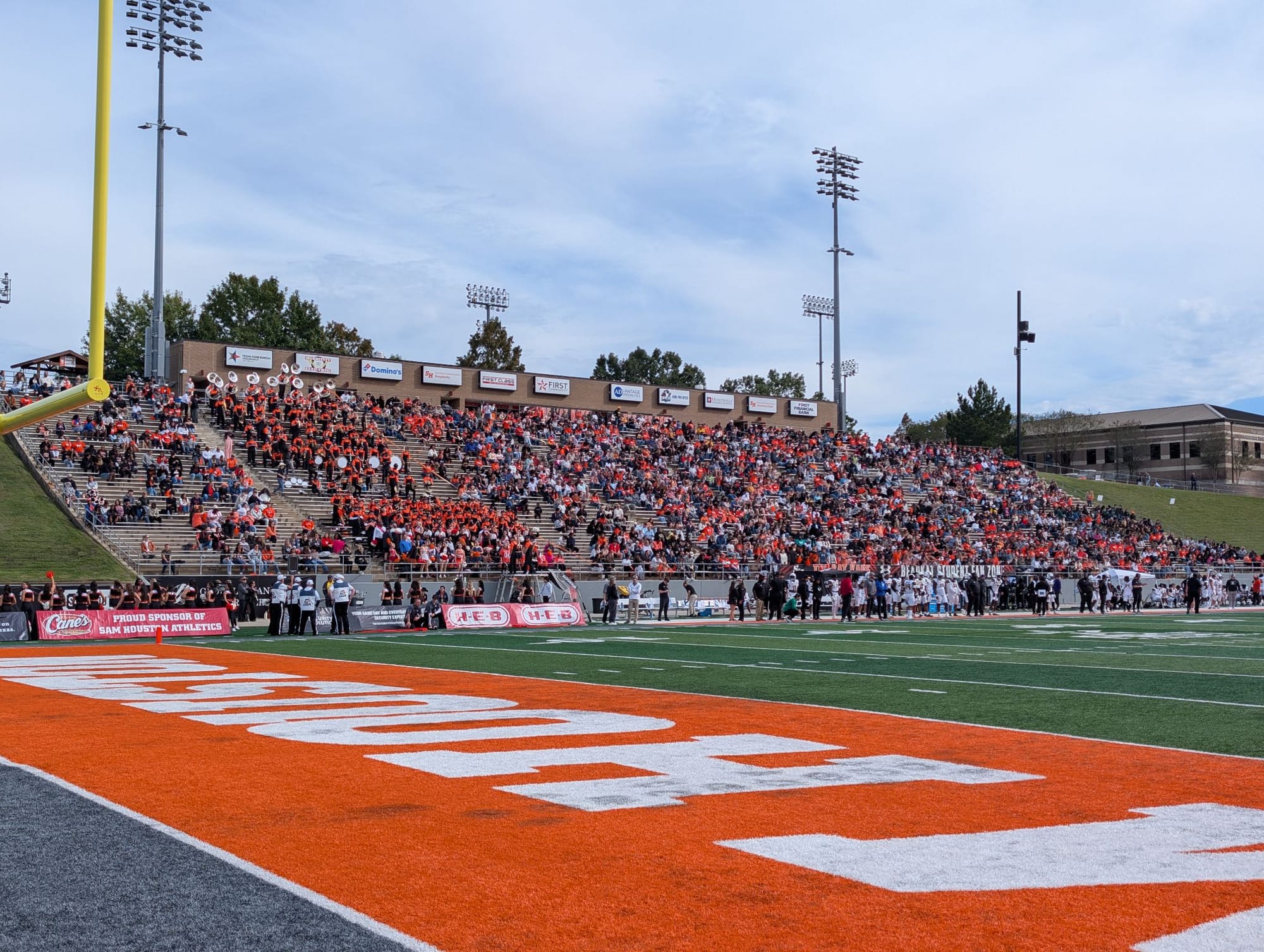
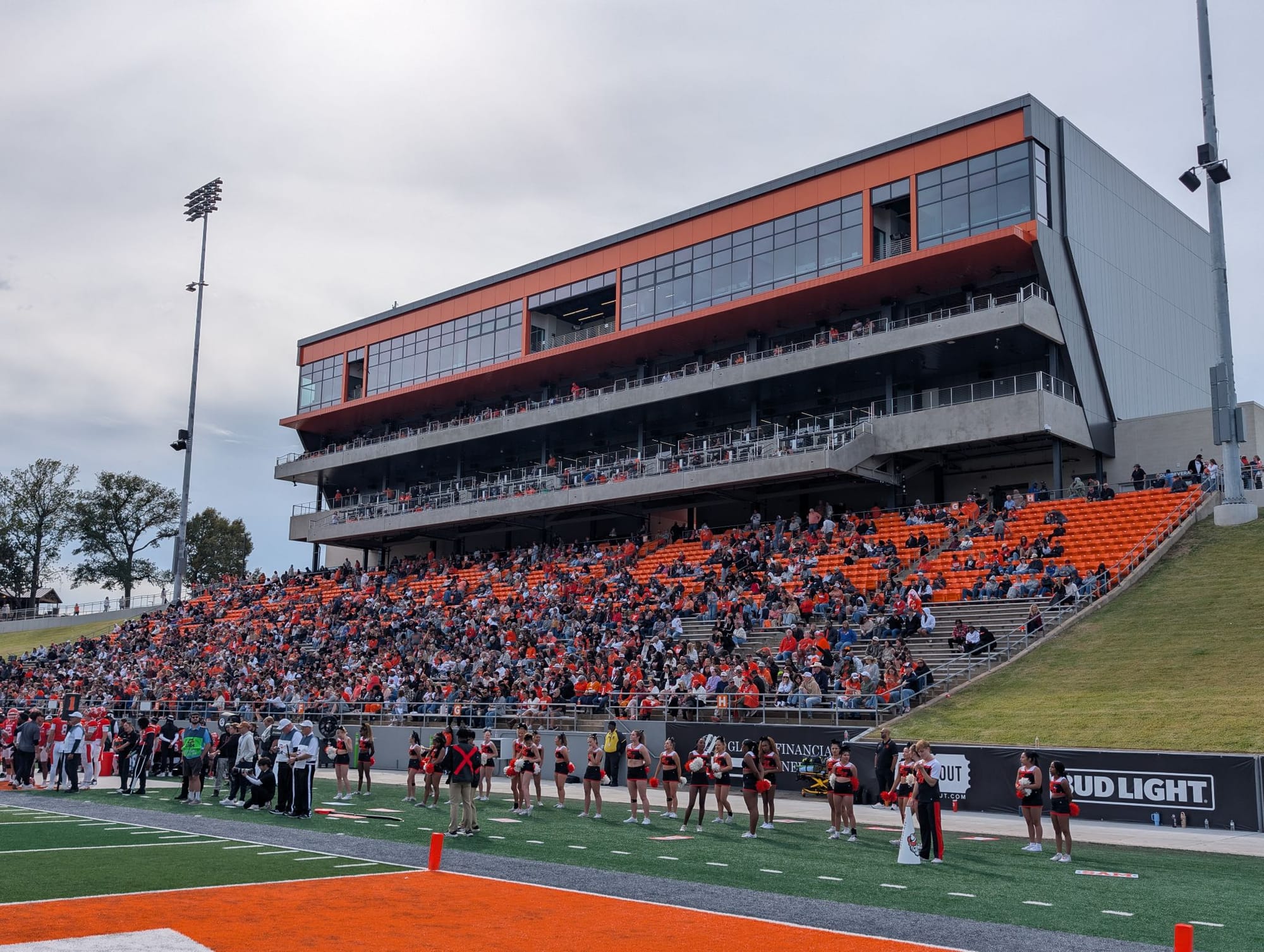
The visitor (left) and home (right) sides of Bowers Stadium at SHSU. Photo credits: Jonathan Buckner – Buckshot Photography.
And now there is the issue of replacing Longo and Williams. Williams' retirement timeline should have allowed the university to select his replacement at a leisurely pace. But Longo's departure threw a wrench in the works.
Here, too, Sam Houston’s process has been clunky. Needing both an athletic director and a head coach since Oct. 28, the university does not plan to announce anything until “before semester break” in mid-December. The person tapped to replace Williams will then work with a search firm – before even officially becoming AD – to name a new head coach.
On a proper timeline, the AD would be in place by the end of November, with the coaching hire to follow. Longo has cited his own late hire as one reason for his struggles.
In the meantime, Sam Houston soldiers on without Longo or much of an athletic leadership infrastructure. Many players will transfer. Some high school recruits will de-commit. The longer the search, the worse it will get.
When asked about the selection process, Longo’s $1.5 million buyout, and who he would like to replace him, Williams referred all questions to the office of President White. That office did not respond to our questions.