It's only money
School vouchers are now a thing, in Walker County and across the state.
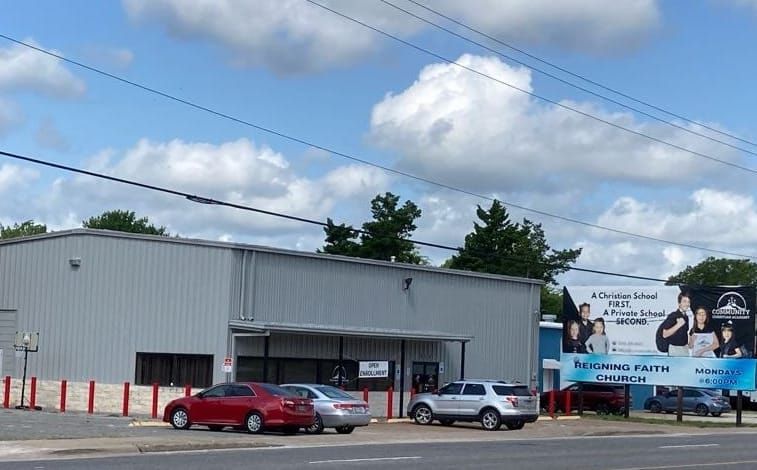
The issue of school vouchers tore 2024's Republican primary elections wide open, counting Walker County’s former state representative, Ernest Bailes, among the casualties. Following wins by voucher supporters, including Rep. Trey Wharton of Huntsville, the 2025 Texas legislature approved a program that uses $1 billion in state funds to cover families' private school tuition and homeschooling expenses.
That program has now become a reality. Voucher applications were due last March, with awards made soon thereafter, and the deadline for awardees to confirm their participation was last month. At least 85,000 families have done so and funds have already started flowing. Let’s follow that money and see where it is going.
You get free tuition, and you get free tuition – it’s like Oprah with the cars
Four schools in Walker County are eligible to receive voucher funds, all in Huntsville. Two run from Kindergarten through 12th grade: Alpha Omega Academy on Hwy. 30 and Community Christian Academy, which opened two years ago in the old Curves location on Hwy. 75 North.
Two others focus on the lower grades: Tomorrow’s Promise Montessori Schools, which has three locations in town, and Faith Lutheran School on Hwy. 30.
Nolan Neugebauer, Headmaster of Alpha Omega Academy, is seeing the effects. “We have over 50 [students] that are approved [for vouchers] by Alpha Omega,” he said. At the current tuition rate of around $9,000 per student, this will amount to almost half a million dollars.
Kaye Boehning, director of Tomorrow’s Promise, is seeing it too. “We are reopening our elementary program and currently will be offering [pre-K] through third, possibly fourth grade, and we are planning on adding a grade each year,” she said. “We have 19 [vouchers recipients] that have enrolled so far, mostly Pre-K and Kindergarten.”
Faith Lutheran declined to speak with The Huntsvillan, but is smaller than Alpha Omega and so should have fewer awardees. Community Christian Academy, which was also unresponsive, has very few students and so cannot account for a significant number of voucher recipients. At these four schools together, perhaps 100 students are receiving vouchers.
Where’s Waldo? Not in private school
This leaves a lot of students unaccounted for, as well over 100 Walker County students received vouchers – and far more than 100 applied for them. There were 46 applicants from within the New Waverly ISD and 585 from within Huntsville ISD, with some others residing in the Richards and Trinity ISDs, which each extend a bit into Walker County.
With almost 300,000 applications for 100,000 awards statewide, applicants were placed in tiers. Students with disabilities, and their siblings, and those with household incomes under $66,000 had highest priority. Most students in these groups received vouchers, and few others.
Neugebauer indicated Alpha Omega parents were not upset with this outcome. “There has actually been a lot more awarded than previously thought. Of the five areas [priority tiers] people were put in, they were able to reach into the third bucket so some people were pretty excited and surprised rather than disappointed." Boehning hadn’t heard parent dissatisfaction on this front either.
The total number of voucher awardees residing in Huntsville ISD was 221, with perhaps another thirty from elsewhere in Walker County. If roughly 100 attend one of these four private schools, the remaining 150 are unaccounted for. Some are surely homeschoolers – there are hundreds of homeschooled children in the county[1] – but one cannot be more definitive than that.
The other side of the equation
Vouchers could also influence school operations. For the private schools, they could allow tuition increases that permit pay raises or facilities expansions. The public schools, on their part, might need to raise their game to stay competitive with private schools, now that they are more affordable.
It might be too early to tell, but there is no sign of any of this just yet.
Boehning did not discuss the operational side of her schools, but Neugebauer was unreserved. “We increased [tuition] a small percentage, but it's along the lines of what we do every year, about 2 or 3%. We did not increase [in order to] capture all the [voucher] funds, that was not something considered.”
This is not illogical. Most families at Alpha Omega or anywhere else do not receive vouchers and feel the full impact of tuition increases.
“It’s not necessarily a boost to our school's operating budget," Neugebauer continued. "Mainly it’s been a huge blessing to the families that have received it, lessening a burden for them in paying for tuition for schooling.”
The impact on local school districts appears to be similarly small. State data show that the vast majority of vouchers applicants were not previously attending public school. This minimizes the change in enrollment patterns and lessens competitive pressures.
While Huntsville ISD had the largest number of vouchers recipients in our area, the highest fraction appeared elsewhere: Richards ISD, which extends south and west from the southwestern corner of Walker County. With a total of 249 students last year – all grades attend a single school – it is one of the smaller districts in the state. Yet it had 130 families apply for vouchers and 48 receive them.
Statewide, there is one voucher recipient for every 50 public school students. In Richards, this ratio is ten times higher. If vouchers are impacting any public school district, it would be Richards.
But that isn’t happening, according to Richards ISD superintendent Michael Smith – who was surprised to learn of so many voucher recipients from his district. He projects to begin the year with 272 students, well more than last year.
"I am not aware that we have lost any students due to vouchers," said Smith. "In my three years at Richards, we have averaged ten to twelve new students to the district each school year. This trend has continued even after the implementation of school vouchers in Texas, so I assume that families who received vouchers were already enrolled in a private school."
Rather, Smith has the opposite problem: planning for expansion. "Last year, the district purchased several acres of land near the [current] school to prepare for the inevitable growth," he said. There are no immediate plans to use that land, as existing facilities are adequate in the short term.
Richards' experience underscores the state of flux in education in Walker County. In addition to vouchers, two districts (Huntsville, Trinity) have new superintendents, while two others (Richards, New Waverly) are growing rapidly.
With the unavoidable tradeoff between vouchers and public schools – money used for one can't be spent on the other – and the large number of unfunded vouchers applications, this state of flux – and the political hot potato that goes with it – is likely to continue in the near term.
Like what you read? Smash that subscribe button at top right (desktop, tablet) or in the drop-down menu (phone) and receive occasional updates when we publish new stuff, or follow our Facebook page or Twitter feed.
[1] Walker County has about 8,400 children aged 6-17. Public schools enroll a little over 7,000 of these and the private schools 600-700, leaving a remainder of about 700 children that are probably homeschooled.