Behemoth
Sam Houston State University has gone big into commercial property leasing, flirting with socialism and the letter of the law in the process. The shocking final installment of our three part series on SHSU property acquisitions.
Sam Houston State University has a media arm that produces frequent updates about happenings on campus. It covers a lot. This year, for example, there have been stories about a new charter school in Klein, a partnership with a school district, a free exhibit at the museum, and much more.
What you won't find is anything about the university's giant, $31 million property acquisition earlier this year – its largest purchase ever. In fact, SHSU has made several large acquisitions recently, as our previous article in this series showed. Yet its media arm has said virtually nothing about any of them – and isn't answering our questions, either.
It is the dog that didn't bark in the night. What is it that SHSU would rather you didn't know?
Three waves of property purchases
As detailed in our previous article in this series, the university has engaged in three waves of commercial property acquisitions over the last decade.
The first wave occurred around 2017, and consisted largely of small businesses along Sam Houston Ave. right near campus. This wave was textbook: planned for ahead of time and executed with an eye to the future, when that land is to hold a new residence hall.
The second wave consisted of a string of commercial properties along Sam Houston Ave. purchased around 2022. It was not textbook. These properties were not earmarked for purchase in key planning documents, and have no anticipated use to the university that they will divulge.
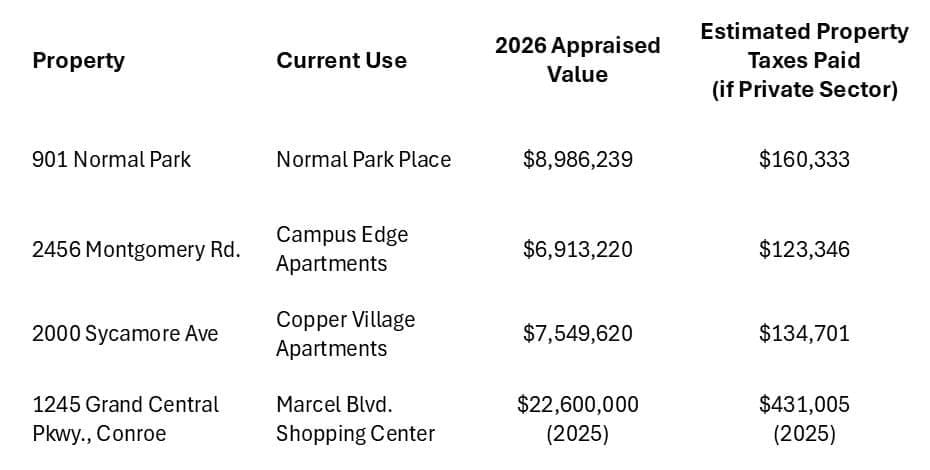
The second wave properties are, at least, adjacent to campus and (generally) inexpensive. This is not true for the third wave of purchases, which began in 2022 and continues to the present. It consists of a series of large commercial properties some distance from campus, whose functions are typically reserved for the private sector: apartments, office space, retail. What is going on?
Apartments
Two of the four purchases in this third wave are apartment buildings east of campus – Campus Edge Apartments along Montgomery Rd., and Copper Village Apartments along Sycamore Ave. They represent the only part of SHSU's housing inventory that was not built by the university.
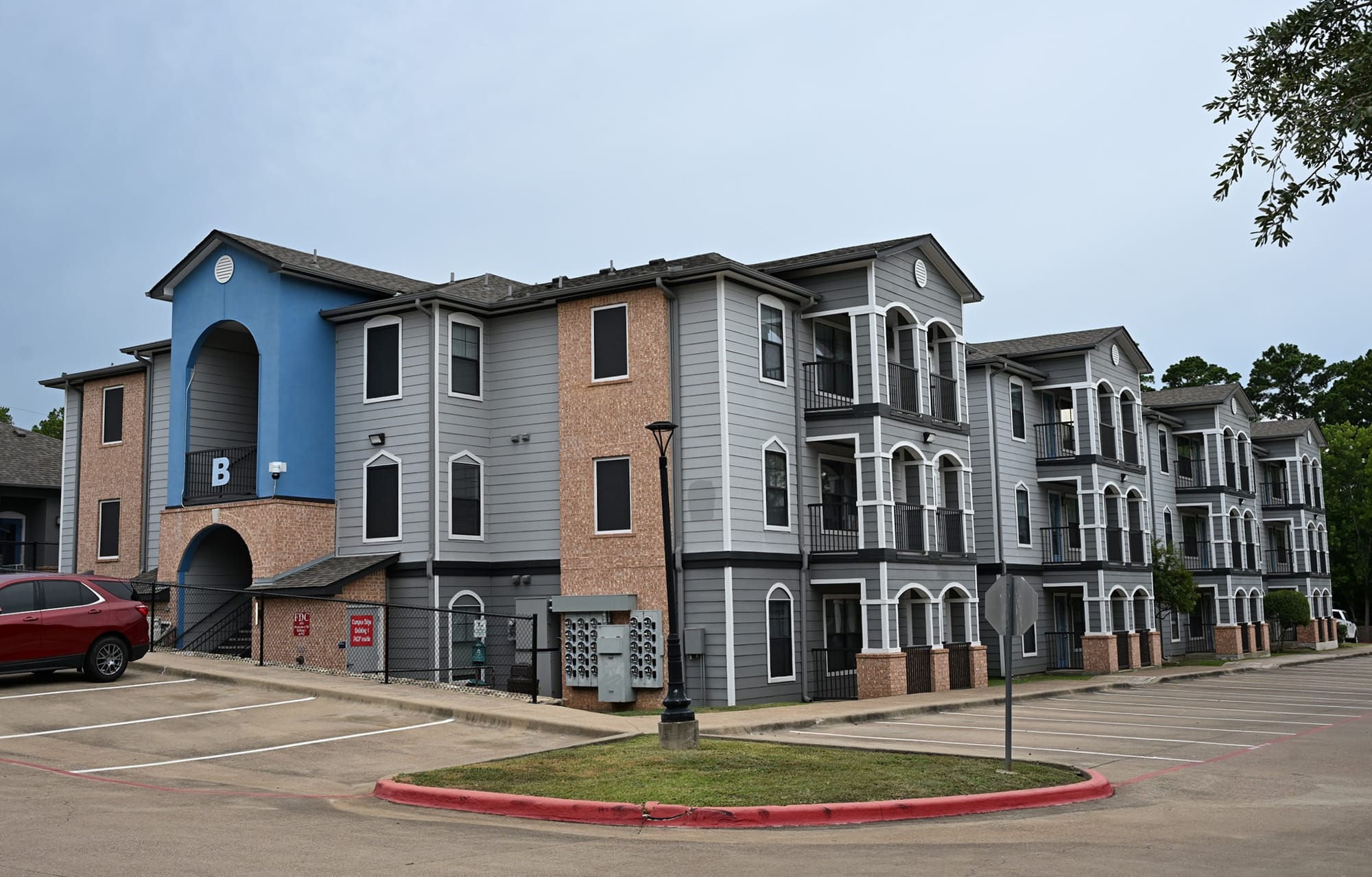
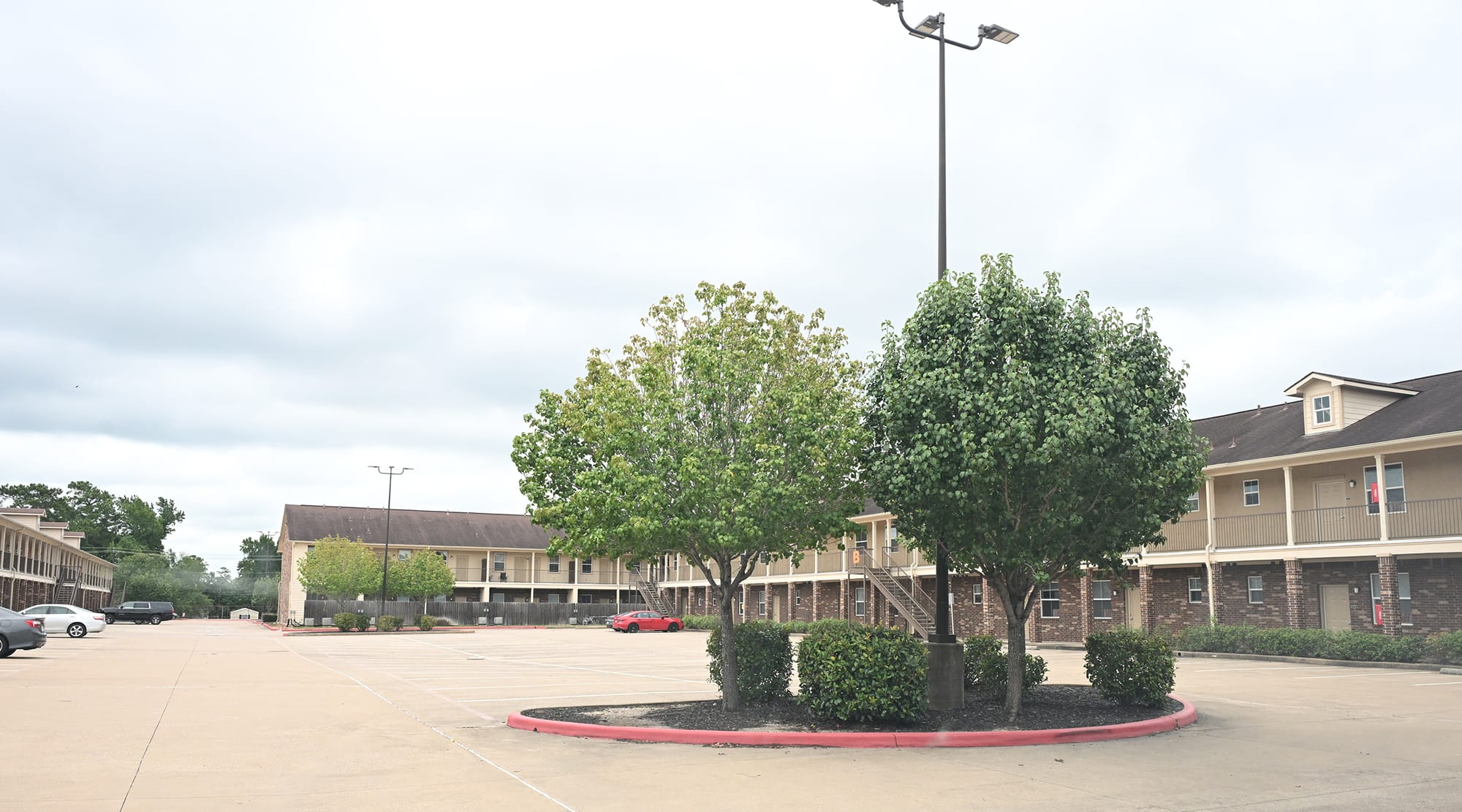
Left: Campus Edge Apartments, recently acquired by the university to disastrous effect. Right: Copper Village Apartments, another new addition to university inventory. Photo credits: Cade Crippin.
Copper Village doesn't get many Google reviews, but Campus Edge does. A close look settles the question: Which is better at management, the public sector or the private sector?
Until about three years ago, when it was taken over by SHSU, Campus Edge's reviews were overwhelmingly positive. Since the takeover, they've been almost exclusively negative, with three-quarters of reviewers giving the complex the lowest possible rating. A scathing review from someone who experienced both management regimes specifically blames the change in ownership.
Nonetheless, that need not dissuade the university, because of its enormous tax advantage. Campus Edge apartments will bring in perhaps $1,500,000 in rent this year.[1] If it was still in the private sector, it would also incur $123,000 in property taxes – a cost that a state university doesn't have to pay. A cost advantage that large can cover for a multitude of management sins.
Normal Park Place and Marcel Blvd.
The remaining two purchases are the kinds of property rarely associated with public universities.
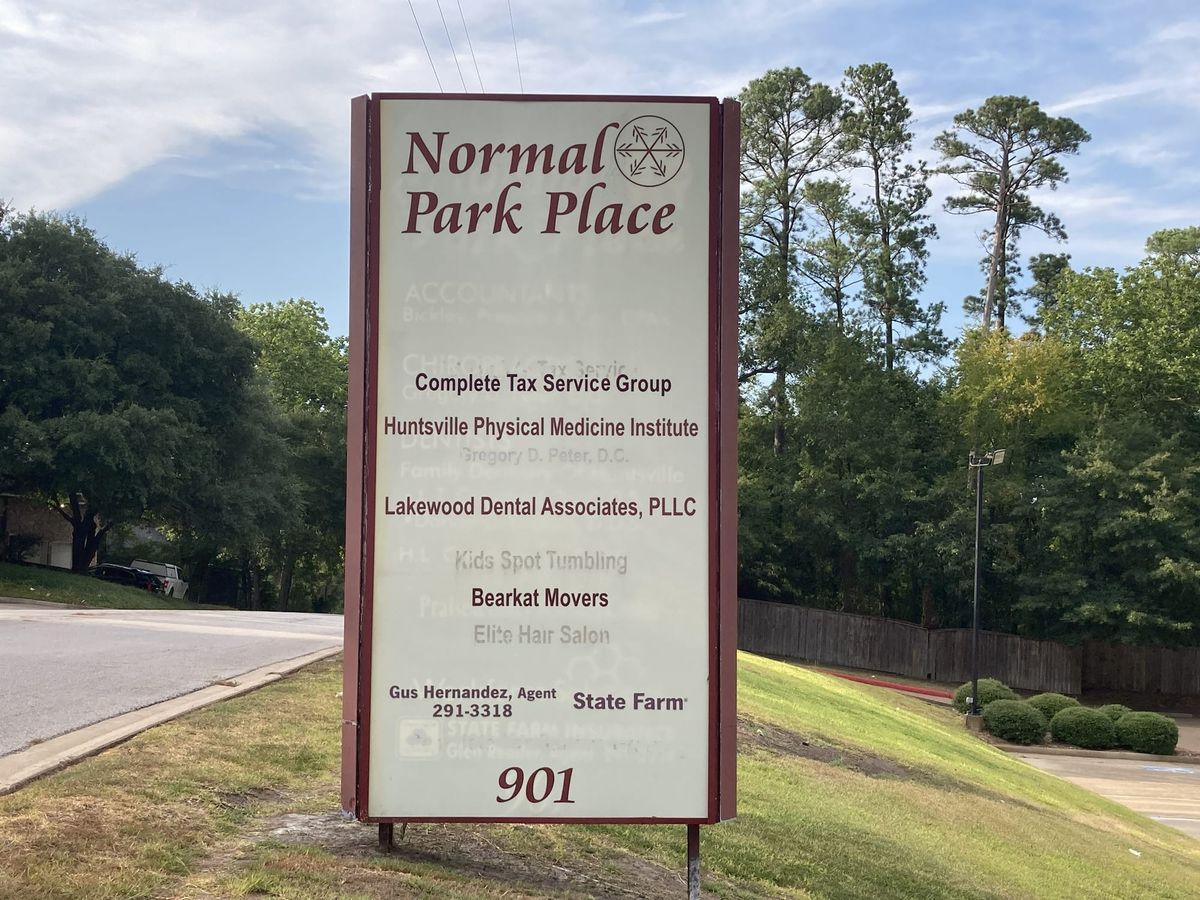
The most puzzling is Normal Park Place, a large office building located on Normal Park Dr. slightly north of 11th St. Purchased in 2022, it has just a handful of tenants. Walking through the quiet, cool interior feels almost haunted.
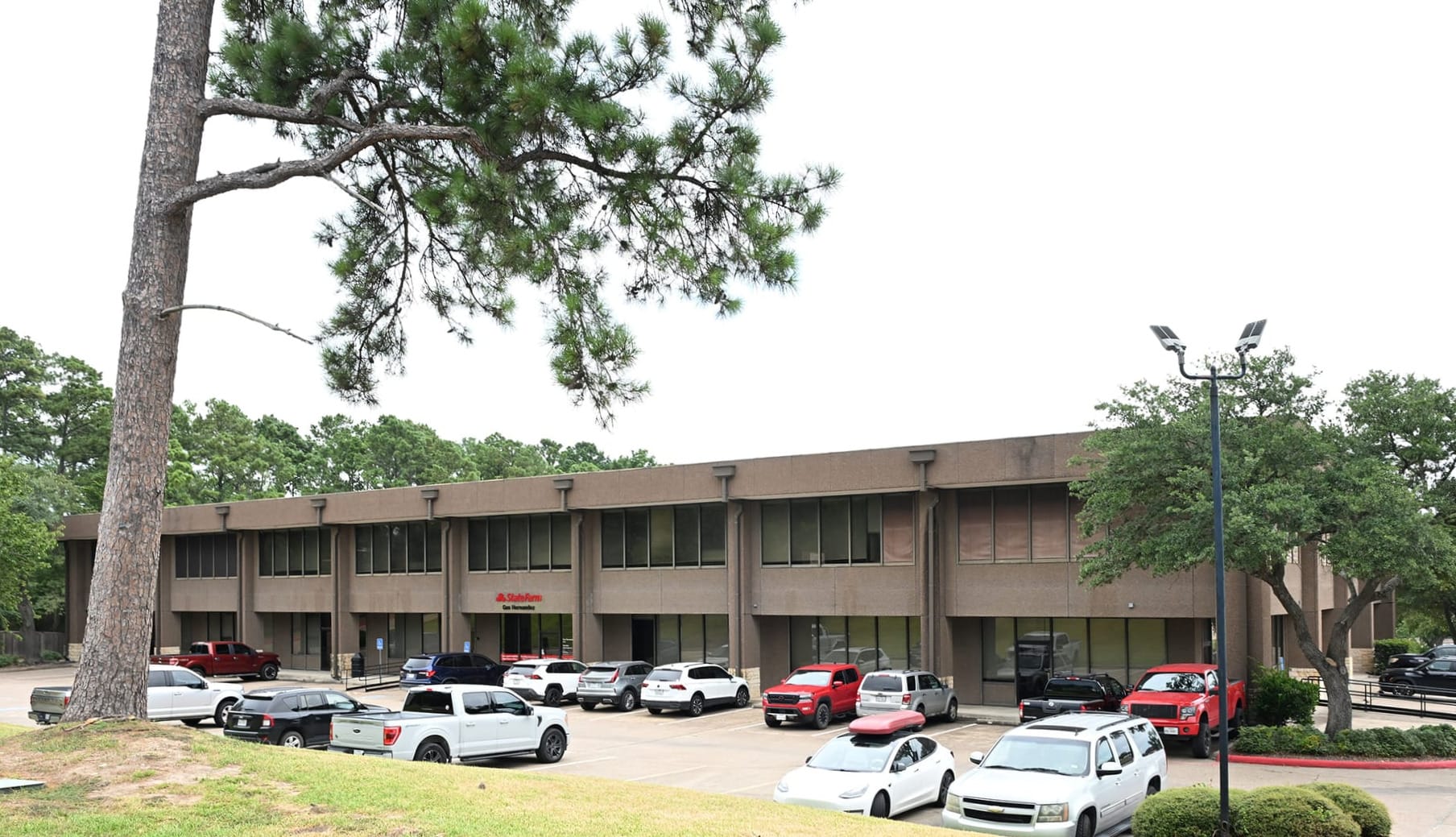
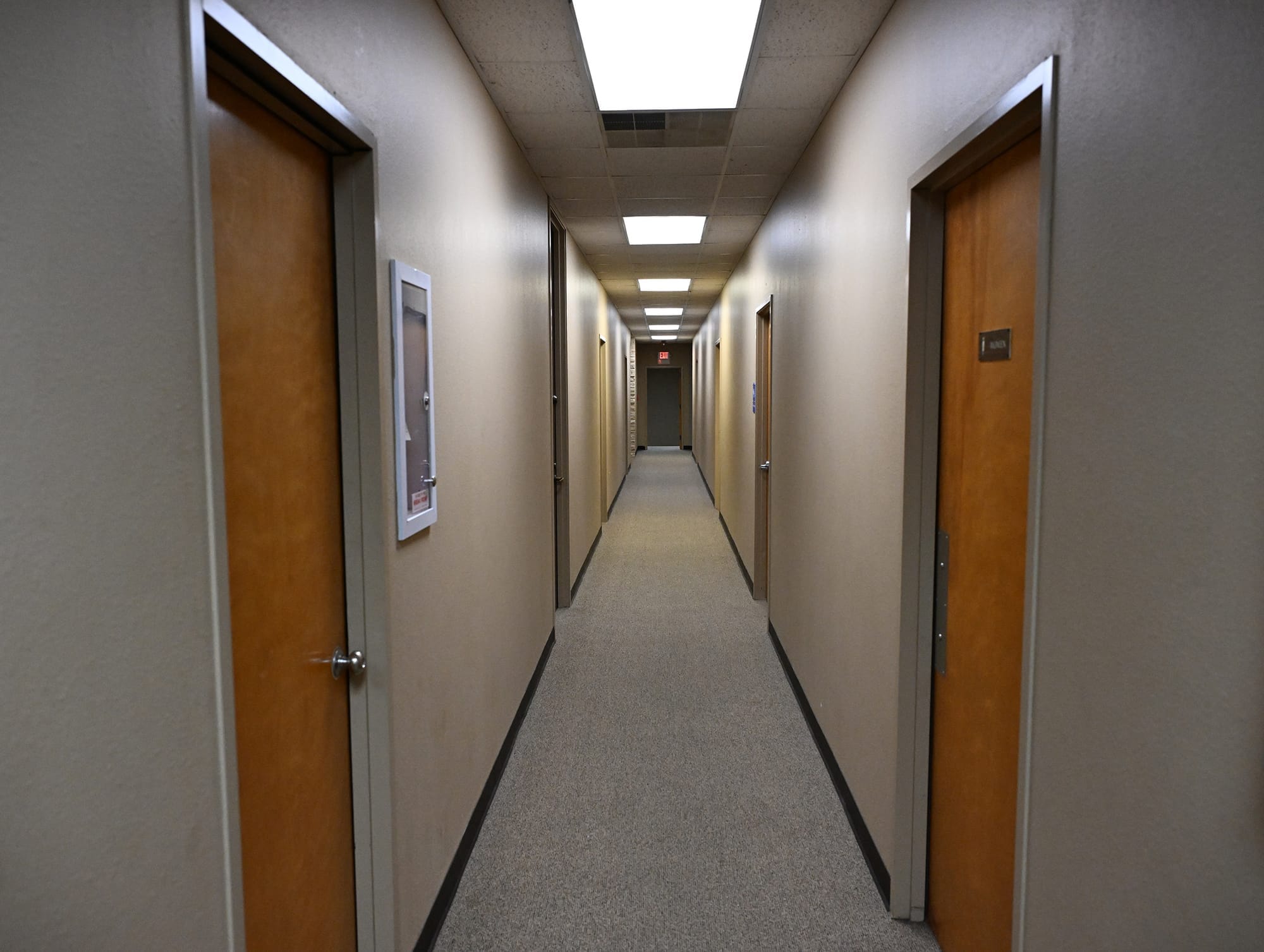
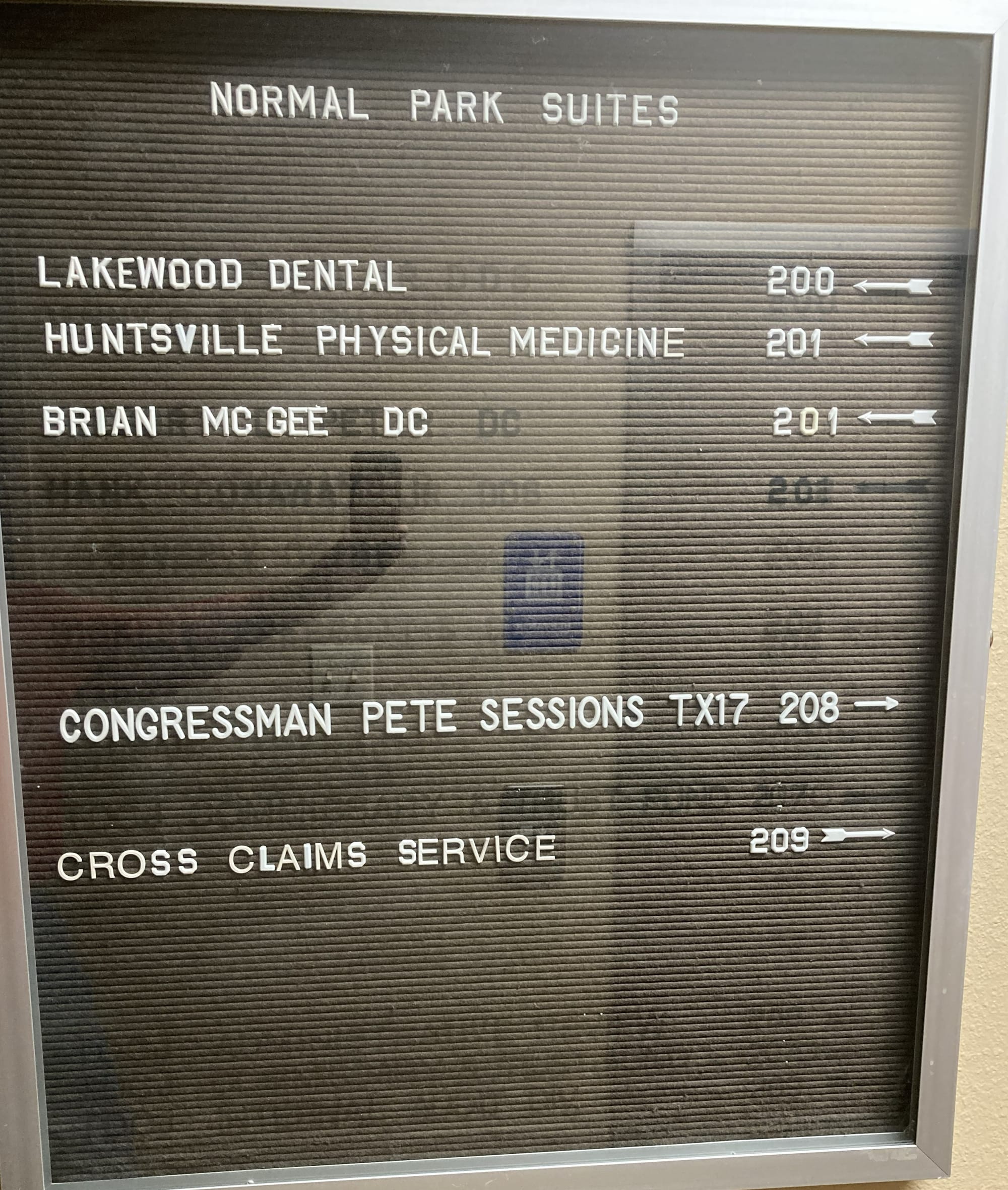
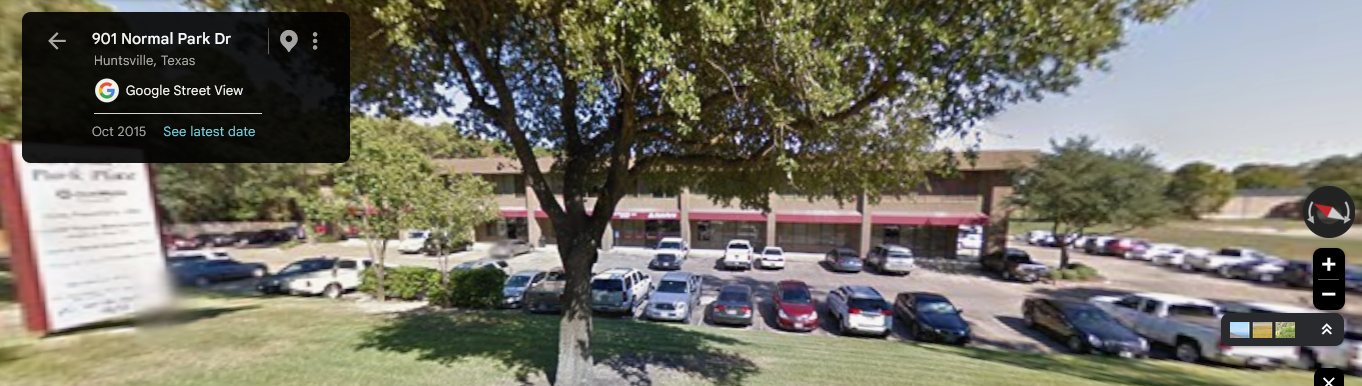
Top: Normal Park Place is largely unoccupied, and the inside looks a little spooky. Photo credits: Cade Crippin. Bottom: This sign, like the one out front, contains the ghost of past tenants from when the building was full, as in this 2015 snapshot from Google Maps.
The puzzle is why this building was bought in the first place. It is over a mile from campus, contains no university office, performs no university function that we can detect. (Here are the plans for the first floor and second floor.) Instead, it holds a small number of businesses, with most of the space up for lease.
In Feb. 2022, SHSU told its board of regents this purchase was for "office space for University faculty and staff." It's been four and a half years, and there is no such thing. What is going on?
The situation is similar with the other purchase, the one alluded to at the top of this article. Marcel Blvd., located across the street from SHSU's medical school in Conroe, is 8½ acres of recently developed, prime commercial property along I-45. No wonder it cost $31 million.
Roughly 10% of this space is used for the "SHSU Physicians" medical clinic that is associated with the medical school, while a little over half contains commercial tenants including a nail salon, a sushi bar, and an indoor golf facility. The remainder, three large units, are available to rent. It is an upscale Conroe version of a strip mall.
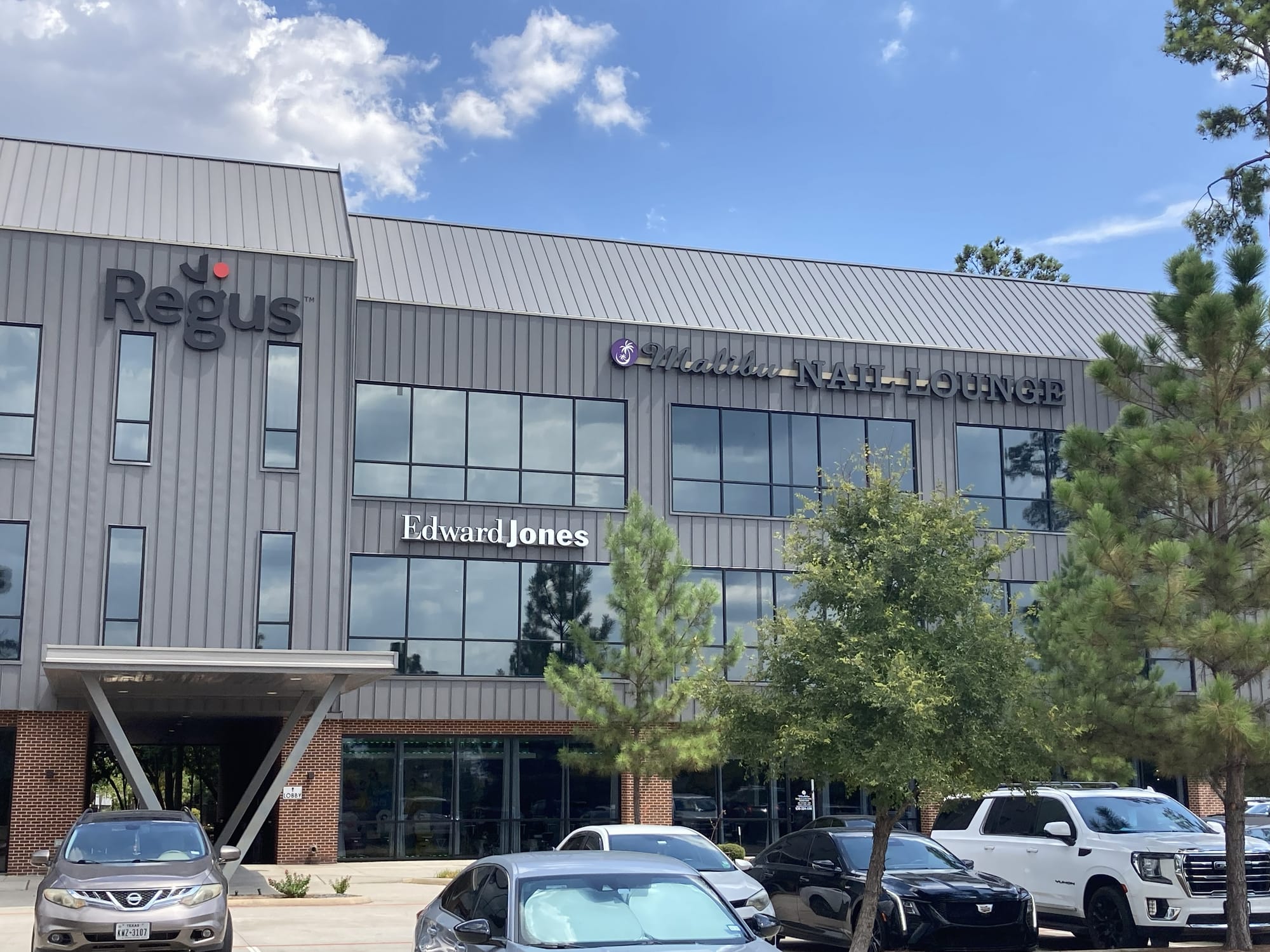
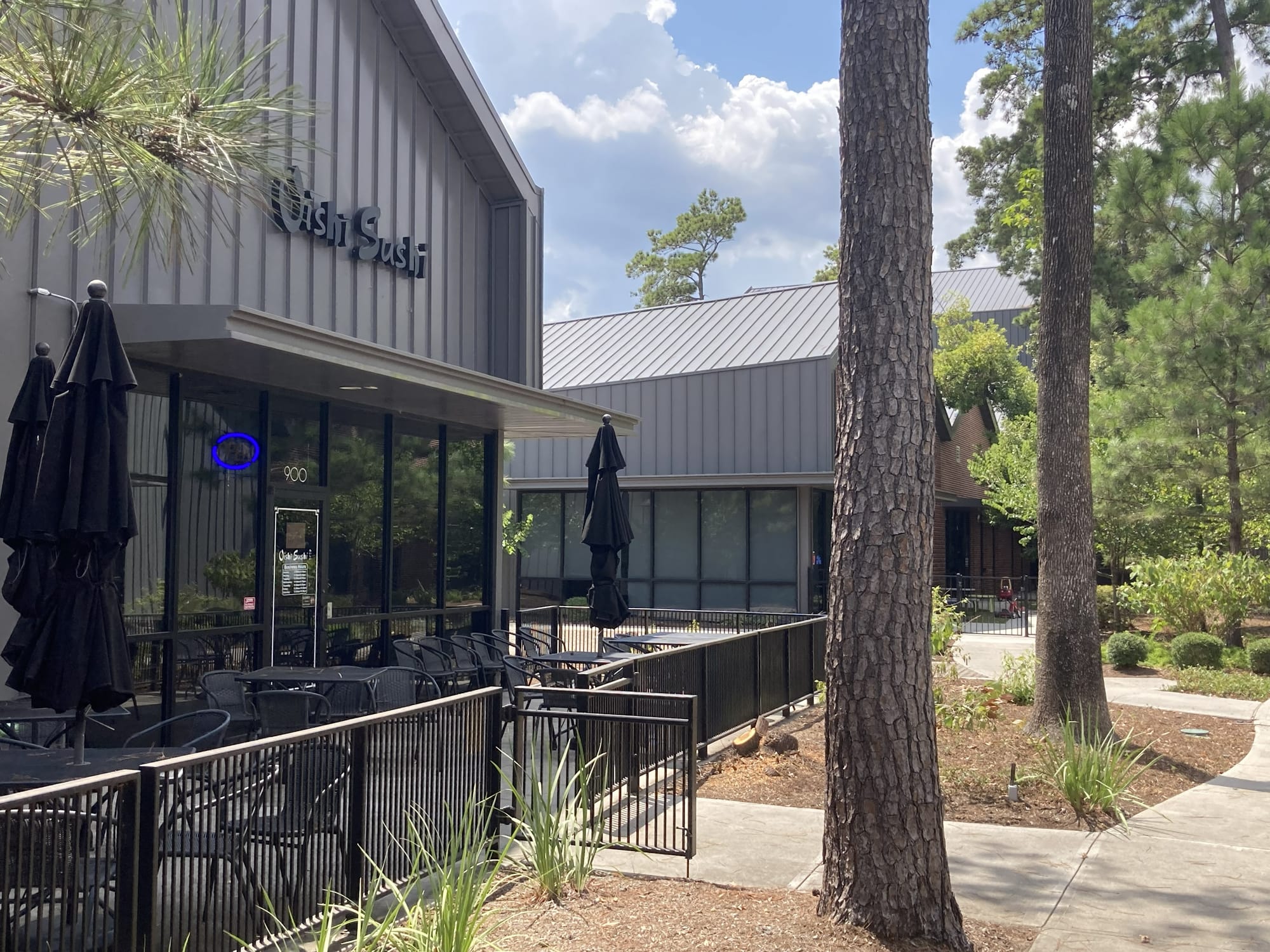
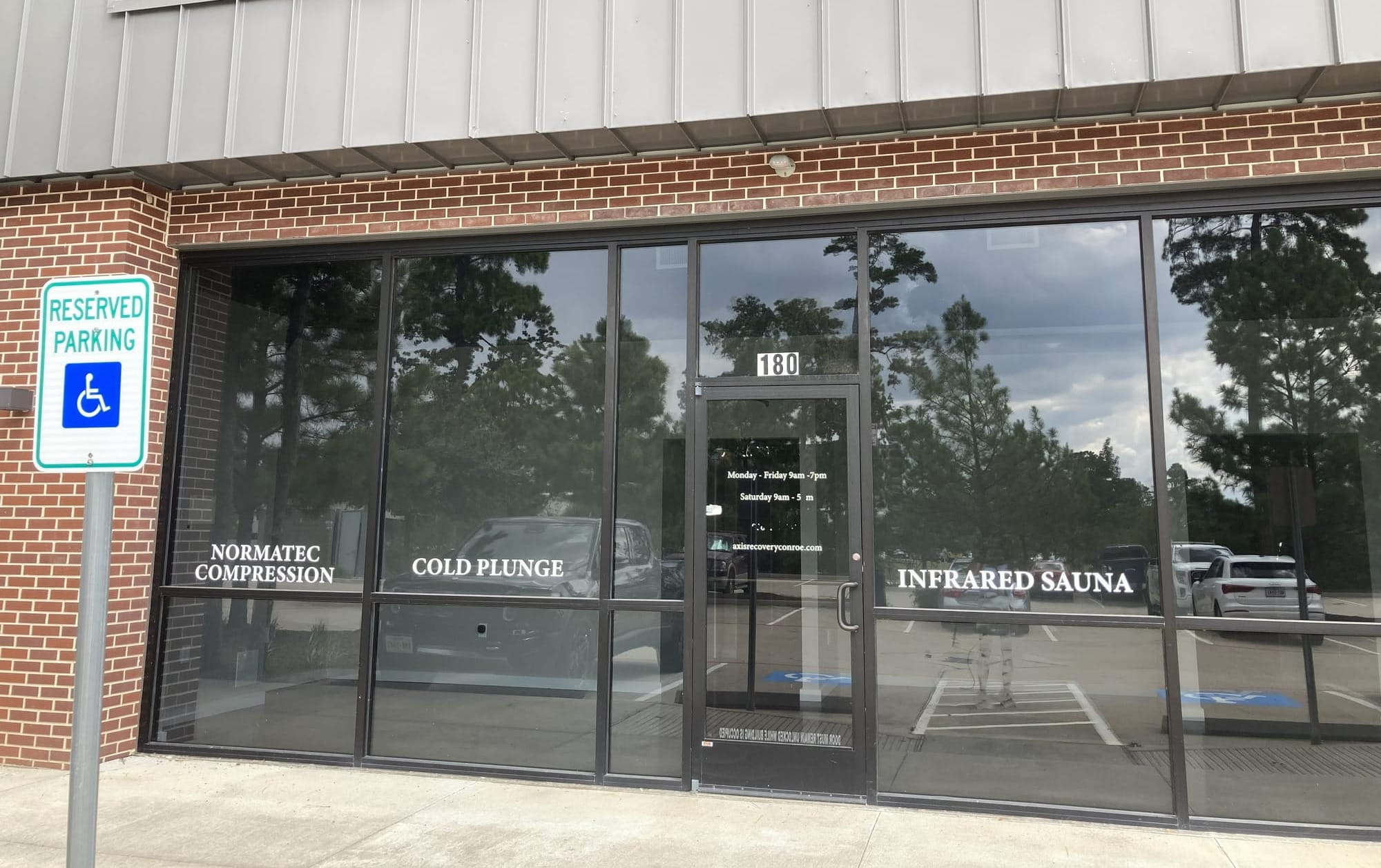
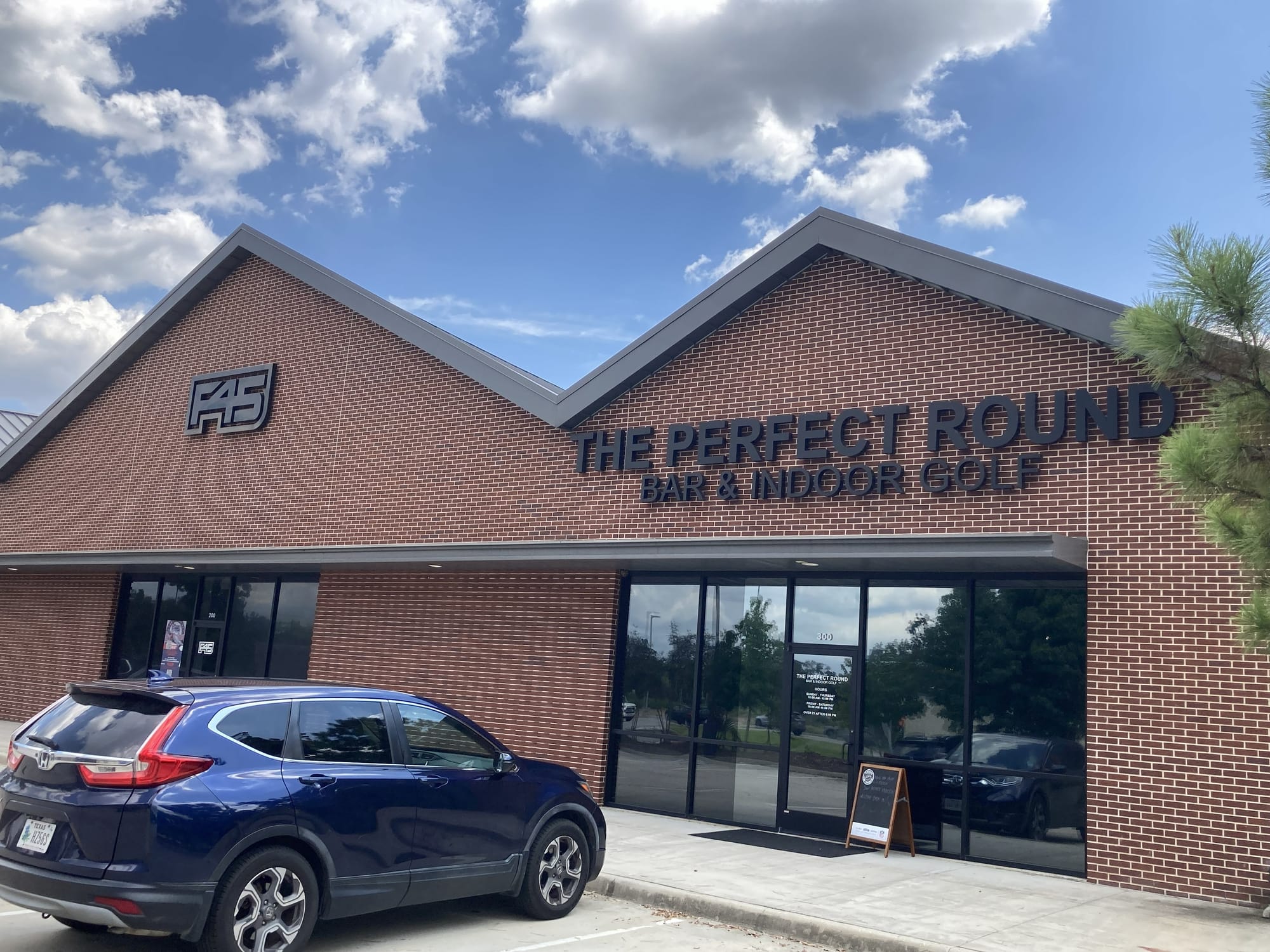
Clockwise from top left: Marcel Blvd.'s establishments include a nail lounge, a sushi joint, an indoor golf place, and a "recovery center" (now closed).
Both purchases were approved by the regents of the Texas State University System, to which SHSU belongs. Perhaps Normal Park Place slipped through the cracks, as it was packaged with many other items for quick approval. But not Marcel Blvd. Just before last Christmas, the regents held a special meeting solely to approve this purchase.
The meeting lasted eight minutes and not one question was asked – including whether the property was included in the university's 2023 Campus Master Plan, the key planning document for facilities purchases. (It was not. Neither, for that matter, was Normal Park Place.) Most discussion was about whether the property was worth the price. One regent joked, "We don't want all the land in the world, we just want all the land next to us," to general amusement. The motion to purchase the property was unanimously approved.
Has SHSU gone rogue?
Wait, you ask, can universities just go and purchase property for whatever reason? Nope. The relevant text from the Texas Education Code states that SHSU "may acquire [property] needed for the proper operation of a system university." Presumably, that excludes leasing out commercial space for offices, restaurants, etc., except insofar as these properties are held for future university expansion.
To see if SHSU's approach to property acquisition was typical, we compared its real estate office to those of the University of Texas System and the Texas A&M System.
SHSU's office is all about leasing property – multiple units at Normal Park Place and Marcel Blvd., plus a couple of small houses. In contrast, the UT System – consisting of 13 institutions – has five properties for lease, three of which were donated to it. The A&M System, which has 12 universities total, isn't leasing anything at all.
In other words, SHSU is currently trying to lease more commercial property than the UT and Texas A&M systems combined.
One can see the appeal. When holding property, the university has a tax exemption that private landlords do not. Money denied to local government is extra profit for SHSU. Nonetheless, its aggressive approach to real estate runs uncomfortably up against its legal mandate and flirts with socialism.[2]
Perhaps avoiding issues like these is the reason that dog didn't bark in the night, the reason SHSU's media arm didn't respond to our questions or publicize the Marcel Blvd. purchase and its predecessors. This time, however, silence speaks louder than words.
This article wraps up a three-part series on Sam Houston University real estate. Part one, on new classroom buildings colliding with reduced in-person enrollment, is here. Part two, on the university's commercial property purchases throughout Huntsville, is here. The Texas State University System was also given an opportunity to comment for this article.
[1] Campus Edge holds 180 people and charges almost $4,000 per semester.
[2] Leasing out office and retail space without a bona fide university purpose is "social ownership of the means of production," pure and simple.