A dangerous place to walk
The area surrounding Sam Houston State University can be hazardous to pedestrians.
Last week we learned how Huntsville's patchy sidewalk system can be a problem, and of the city's and county's odd quest to have the federal government pay for a huge walking path along University Ave. to downtown.
That this quest would fail was predictable. A giant transportation master plan had examined pedestrian needs throughout the city and deemed this corridor just fine.
The city and county had it backwards. The purpose of sidewalks isn't to draw people downtown, it's to get walkers where they want to go. Usually, that isn't downtown – it's to class. Most local pedestrians are college students living near Sam Houston State University. There, walking can be treacherous, and little has been done about it.
The problem of the missing pedestrians
SHSU has 21,000 students, with all but the freshmen living off-campus. A thick cluster of apartments along Lake Rd. houses over 3,000 students, with concentrations along Sycamore Ave., Montgomery Rd., and I-45 holding thousands more.
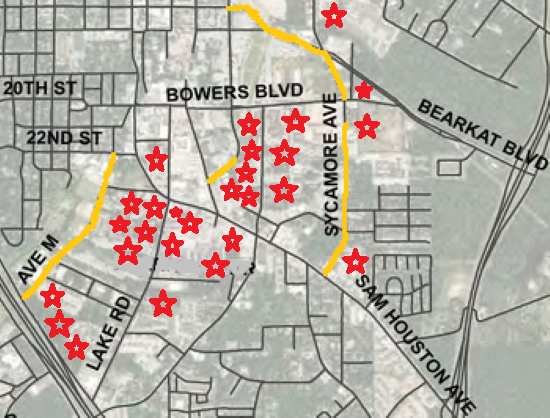
According to Google Maps, you can walk to campus from almost all of these complexes within 15 minutes. During peak hours this beats driving, because parking is difficult. Many students should be walking to class. Where are they?
They are plentiful along Bobby Marks Dr., Bowers Blvd., and Montgomery Rd., which are near campus and have good sidewalks. But it is much less common for students living elsewhere to walk.
Along parts of Sycamore Ave. and Ave. M, there are no sidewalks. It is rare to see students walking here.
Others are deterred by the intersection at Lake Rd. and Sam Houston Ave. Only about 10% of the 3000 students in that area walk to campus, according to two reliable sources. One reason for this can be found in the bureaucrat-ese of that master plan. This crossing:
did not give sufficient time for pedestrians to cross Sam Houston Ave. In addition, vehicles turning north onto Sam Houston Ave. from Lake Rd. have to yield to pedestrians, but this puts a driver’s patience against an active pedestrian walking area. (Abridged and edited from the original.)
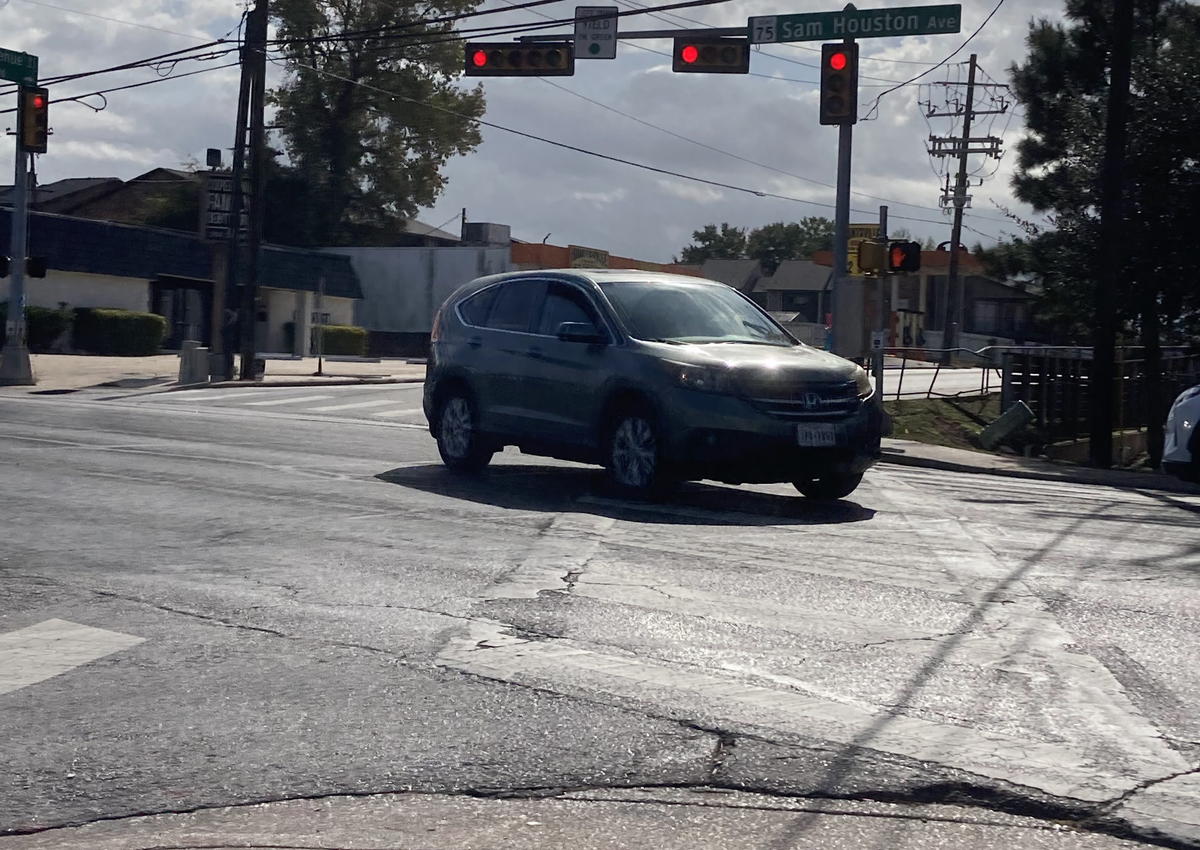
In other words, this crosswalk pits cars turning off Lake Rd. against pedestrians rushing to cross the street.[1] The master plan mentioned this three times, it was so concerned. Six years later, conditions are exactly the same.
It is intimidating. Miguel Vazquez, a senior computer science major from Houston, experienced this exact situation not long ago.
One time, I was walking across the street (Sam Ave.) when the light turned green, and it was dark, and a car came right at me head on. I was frozen in fear until they swerved around me at the last minute.
For the 300 students along Lake Rd. who do walk to class, this crossing is a danger. For the other 90%, it serves as a deterrent to walking. Huntsville's busiest crosswalk is flat-out dangerous.
Another reason Sam students don't walk
These problems, while significant, don't prevent SHSU students from walking downtown. University Ave. has sidewalks and light traffic. What's the impediment there?
Posing this question to three freshmen living on campus uncovered a second impediment to walking: it's dark. Most of the school year takes place off of Daylight Savings Time, and by the time college students are ready to go off campus it's late, or will be when they come home.
This problem occurs all around the periphery of campus, including University Ave. and Lake Rd. Even when the lighting is generally acceptable, key streets have poorly-lit blocks here and there. For the campus population, young and predominantly female, these dark patches could easily be unsettling.
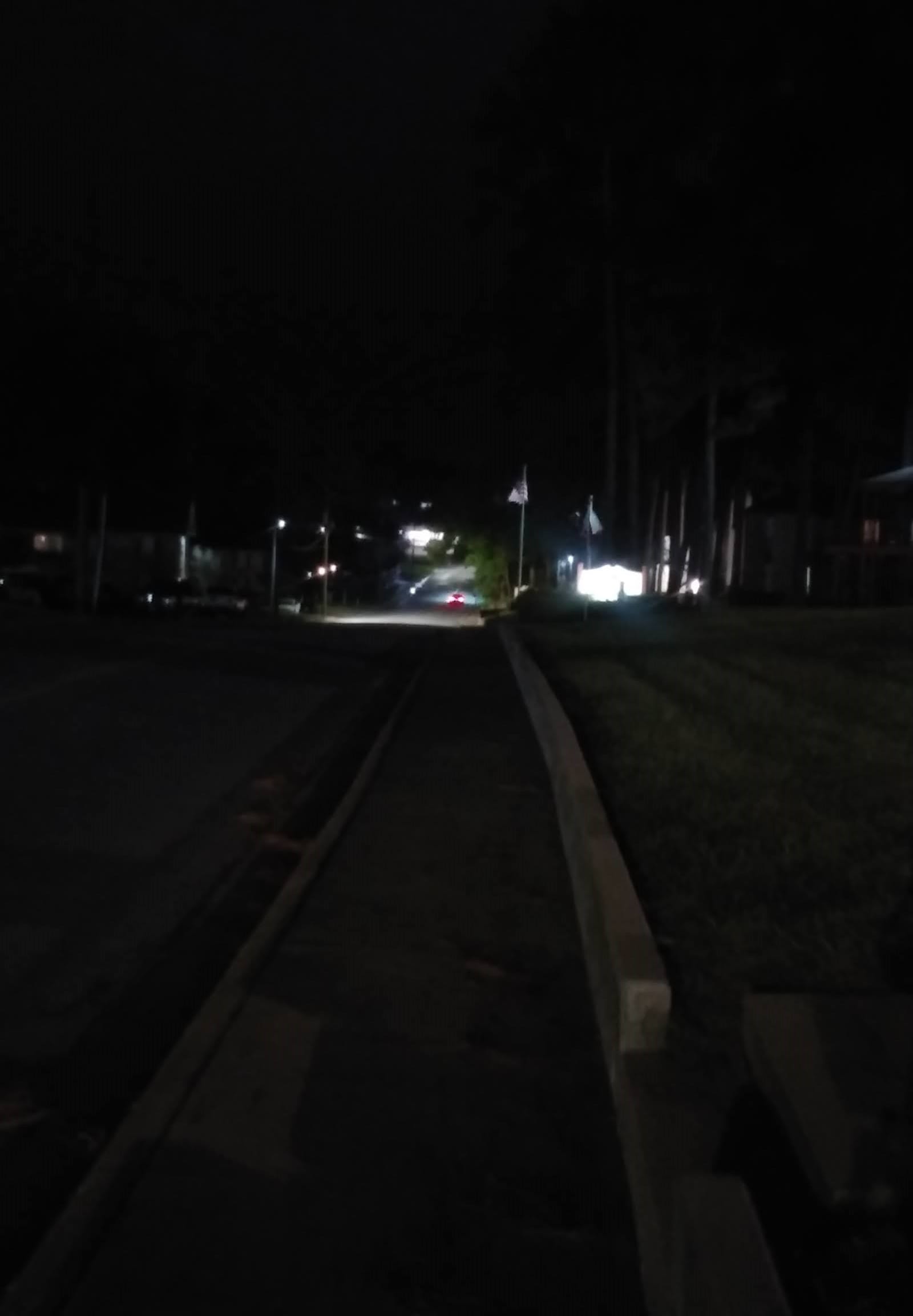
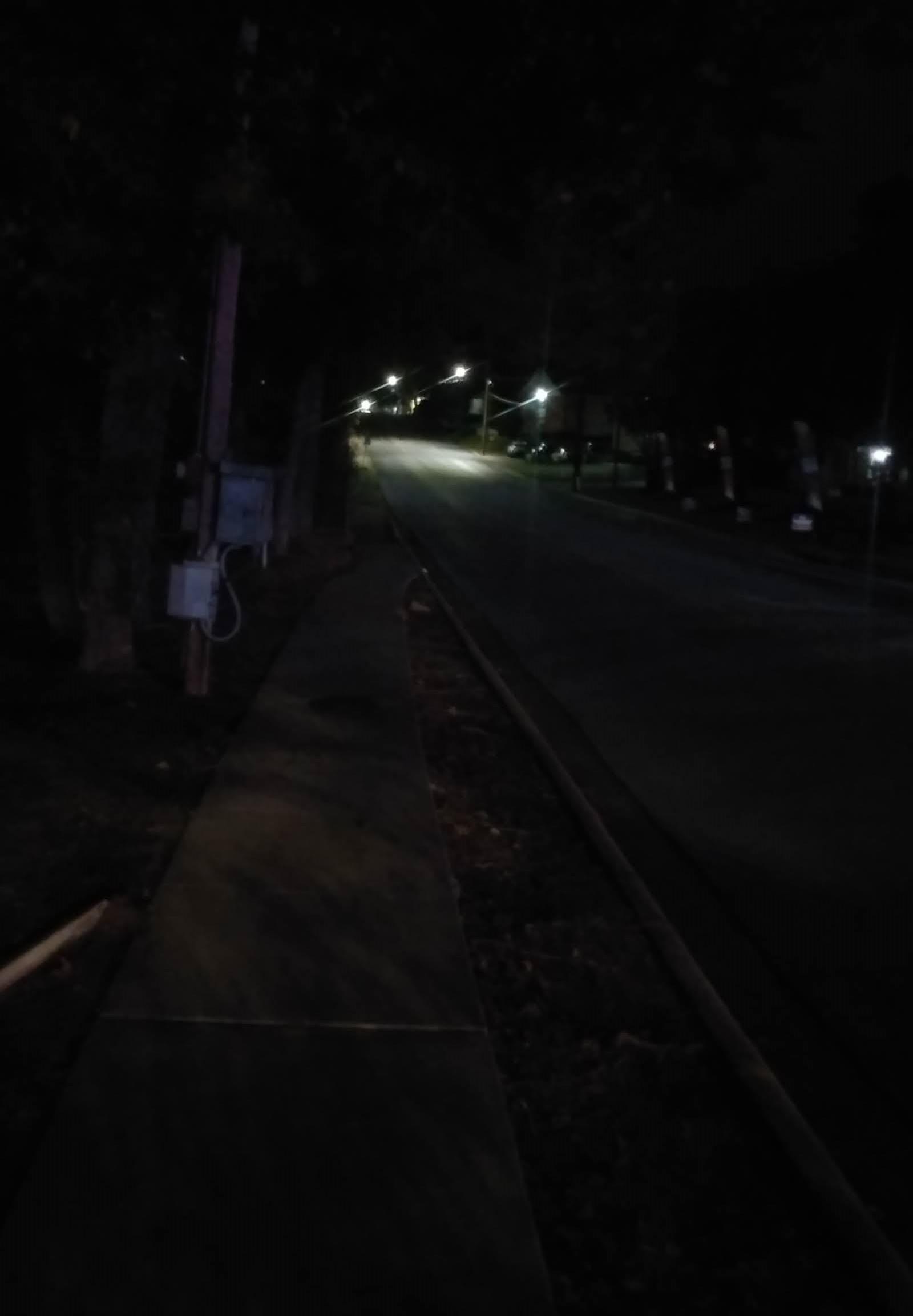
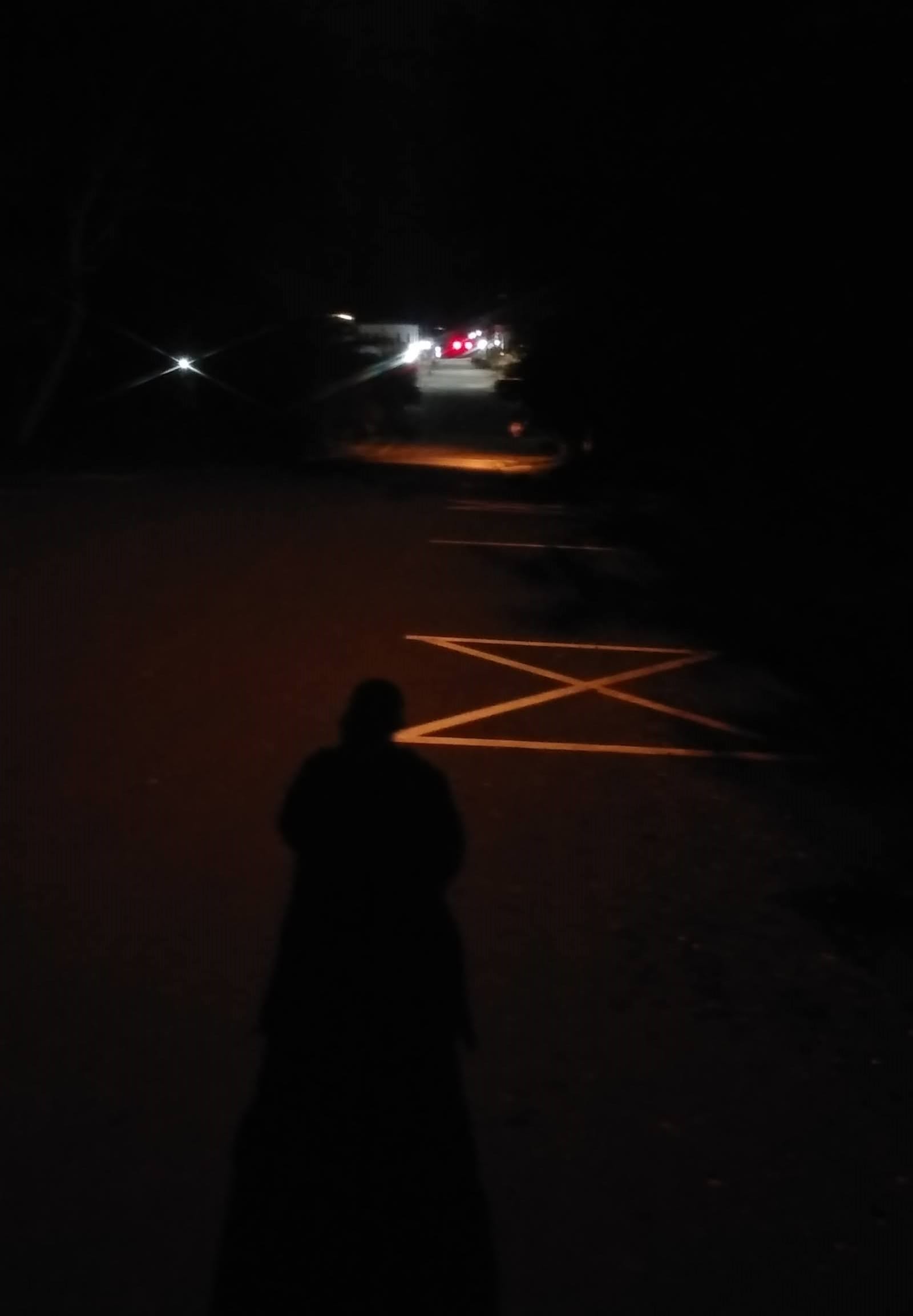
Dark stretches along Lake Rd. near The Pines, further down Lake Rd., and along University Ave.
Addressing both sets of problems would be quite inexpensive.
At Lake Rd. and Sam Houston Ave., fix the push buttons that activate the walk signal, neither of which worked when inspected recently. Then prohibit cars from turning left during that time. To eliminate dark patches at night, add a few street lamps in select locations. You don't need federal money to do this.
Of course, with federal money you could do a lot more. Most roads near campus are unfriendly to bikes, and some need sidewalks. College Station has good sidewalks and even bike lanes near Texas A&M University, a sure attraction of that campus to some students. With the right vision, similar things are possible for Huntsville.
[1] It's actually worse than this. Heading towards campus, the crosswalk angles away from the street, so you can't see the cars behind you while you cross (see the picture at the top of this article).